
How Do I Know If I Need a Sewer Line Repair?
CALL (206) 789-4944
Serving the Greater Seattle Area

Sewer line problems rarely appear all at once. In many homes, the first warning signs are small — a slow drain, a patch of soggy lawn, or a faint sewer odor that comes and goes. But these early symptoms often point to a larger issue developing underground.
Knowing how to recognize the signs of sewer line damage can help you address problems before they escalate into major repairs or costly property damage. For homeowners in the Seattle area — where older pipes, tree roots, and shifting soil are common — sewer line repairs are more common than many people realize.
Below are several of the most common signs that your sewer line may need professional sewer line repair.
1. Soggy or Raised Patches in the Yard
One of the most visible indicators of sewer line trouble is a consistently wet or sunken area in the yard. If the ground feels soft, muddy, or unusually damp — especially during dry weather — it may indicate a leaking sewer pipe underground.
Depending on soil conditions, you may notice:
-
Pooled water or muddy patches
-
Sunken or uneven ground
-
Areas where grass grows unusually thick or green
These changes often occur directly above the sewer line and may signal a cracked or broken pipe allowing wastewater to escape into the soil.

A sewer line failure is often visible as a lush green stripe cutting through an otherwise brown yard.
2. Persistent Sewer Odors
Sewer systems are designed to keep wastewater and gases sealed inside underground pipes. If you begin noticing unpleasant odors inside your home or outside near drains or your yard, it may indicate a damaged sewer line.
Common smells associated with sewer leaks include:
-
Sulfur or “rotten egg” odors
-
Musty or sewage-like smells around drains
-
Persistent odors outside near the sewer line path
Even small cracks in sewer pipes can allow gases to escape, and these issues should be inspected quickly before they worsen.
3. Multiple Slow or Clogged Drains
A single clogged sink or shower is usually a localized plumbing issue. However, when multiple drains in the home begin backing up at the same time, the problem often lies deeper in the system.
If you notice that:
-
sinks drain slowly
-
toilets struggle to flush
-
tubs or showers back up
— it could indicate a blockage or damage in the main sewer line.
Tree root invasion, pipe corrosion, or collapsed pipes can restrict the flow of wastewater and cause multiple fixtures to malfunction at once.
4. Toilets That Drain Slowly or Struggle to Refill
Toilets rely on proper drainage through the sewer line. If a toilet flushes sluggishly, gurgles, or fails to refill normally, it may be reacting to pressure changes caused by a blockage or partial collapse in the sewer line.
While this issue may appear minor at first, it can quickly escalate if wastewater cannot move freely through the system.
5. Unexplained Pest Activity
Damaged sewer lines can attract unwanted pests such as flies, gnats, or rodents. These pests are drawn to moisture and waste escaping from broken pipes.
If you suddenly notice increased insect activity around drains or near your yard, it may be worth investigating whether your sewer system is compromised.
What Causes Sewer Line Damage?
Sewer pipes are designed to last for decades, but several factors commonly lead to sewer line repair in older Seattle homes.
Some of the most frequent causes include:
-
Tree root intrusion: Roots seek moisture and can force their way into small cracks in sewer pipes.
-
Aging pipe materials: Older pipes made from clay, concrete, or cast iron can deteriorate over time.
-
Soil movement: Seasonal shifts, heavy rainfall, and ground settling can place stress on underground pipes.
-
Grease or debris buildup: Years of buildup can weaken pipes and cause blockages that lead to cracks or breaks.
A professional sewer inspection can determine the exact cause and recommend the best sewer repair solution.
Why Early Sewer Line Repair Matters
When sewer line problems are caught early, repairs are often simpler and far less expensive. Ignoring the warning signs can allow small cracks or blockages to develop into major pipe failures that require full replacement.
Professional sewer inspections — typically performed using a specialized sewer camera — allow technicians to locate the problem quickly and determine whether a repair or replacement is the best solution.
In many cases, trenchless sewer pipe repair can restore your sewer line without extensive excavation or damage to your landscaping.
When to Call the Professionals
If you notice any combination of the warning signs above — especially persistent drainage problems or soggy areas in your yard — it’s a good idea to schedule a professional sewer inspection.
At Bob Oates Plumbing, Sewer & Rooter, our experienced technicians use advanced camera inspection equipment to diagnose sewer line issues quickly and accurately. Once we identify the problem, we’ll explain your options and recommend the most effective repair solution for your home.
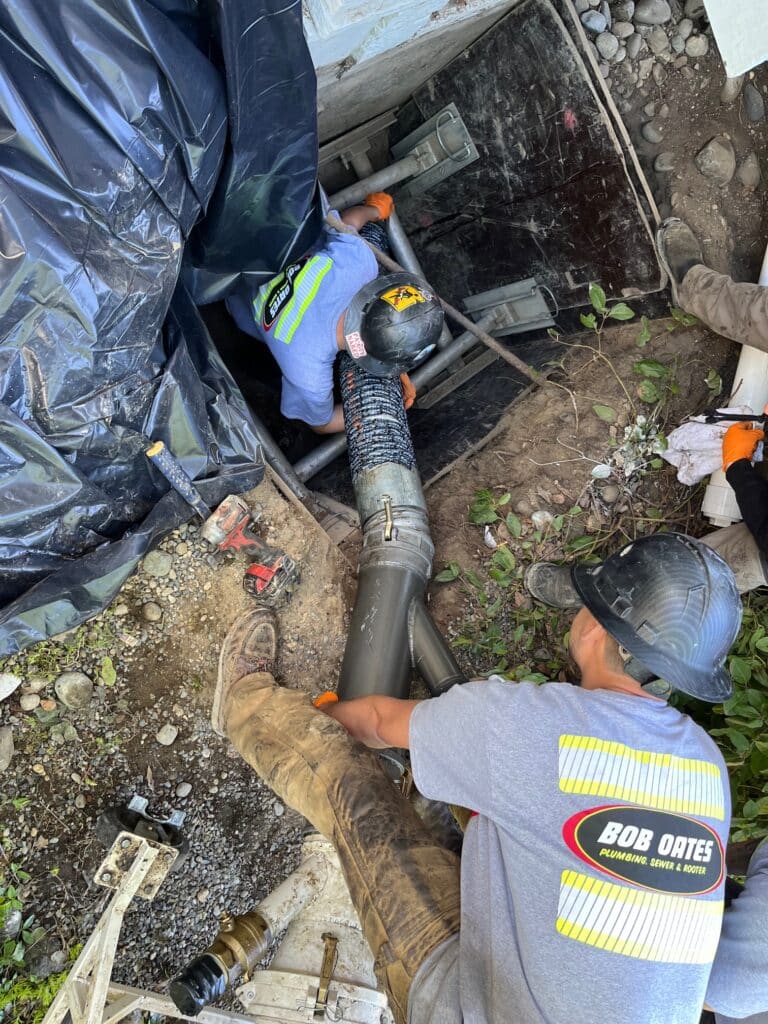
Bob Oates crew completes a trenchless CIPP lining and cleanout installation as part of a sewer repair project.
Protect Your Home From Sewer Line Damage
Sewer line problems can start small but quickly lead to serious damage if ignored. By recognizing early warning signs and addressing issues promptly, homeowners can avoid costly repairs and protect their property.
If you suspect a sewer line problem, the team at Bob Oates is here to help. Contact us today to schedule a professional inspection and keep your plumbing system flowing smoothly!


Rated 5 Stars by Johanna G.
via Yelp.com
"Nothing but great experiences with Bob Oates! Would highly recommend for all your sewer and plumbing needs! Honest, hard working company!"

Proud Member of BOMA
CALL (206) 789-4944
Serving the Greater Seattle Area