
Tree Root Invasion and Removal
CALL (206) 789-4944
Serving the Greater Seattle Area

Rated 5 Stars by Conor S. via Yelp.com

"Bob Oates team provided a sewer scope, a liner and pulled permits for me. Our house was in need of this service following an inspection that roots were getting into our pipes. We compared to another company and found Bob Oates to be more reasonably priced than others. The team communicated well and was quick to help."
Tree Root Invasion in Sewer Lines
Tree root intrusion is one of the most common causes of sewer line problems throughout Seattle and the Pacific Northwest. While trees add beauty and value to a property, their root systems naturally seek out moisture and nutrients. Even a tiny crack, loose pipe joint, or aging section of sewer pipe can provide enough water to attract fine feeder roots.
Once inside a sewer line, those roots continue growing. Over time they can restrict wastewater flow, trap grease and debris, cause recurring drain backups, and eventually damage the pipe itself.
Fortunately, modern sewer camera inspections and trenchless sewer repair techniques allow many root-related sewer problems to be diagnosed and repaired with minimal disruption to your landscaping, driveway, or other hard surfaces.
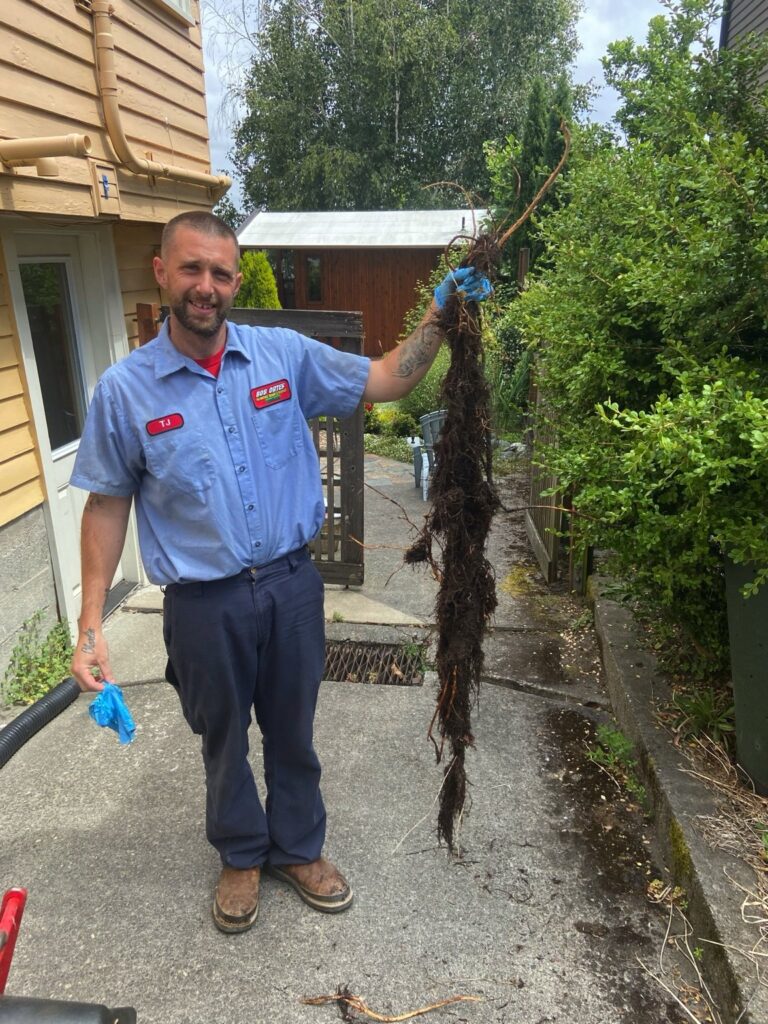
Tree roots extracted from a sewer pipe after clearing a major blockage.
Why Tree Roots Grow Into Sewer Pipes
Tree roots don’t break into healthy pipes simply because they’re nearby. Instead, they take advantage of existing weaknesses.
Older clay, concrete, cast iron, and Orangeburg sewer lines may develop small cracks, deteriorating joints, corrosion, or shifting sections over time. These tiny openings allow moisture to escape into the surrounding soil, attracting nearby roots searching for a reliable water source.
As the roots grow, they expand inside the pipe, gradually collecting grease, paper products, and other debris. What begins as a small intrusion can eventually become a significant blockage or even contribute to pipe failure if left untreated.
Seattle’s mature neighborhoods, abundant tree canopy, and seasonal rainfall make root intrusion one of the more common sewer issues homeowners experience.
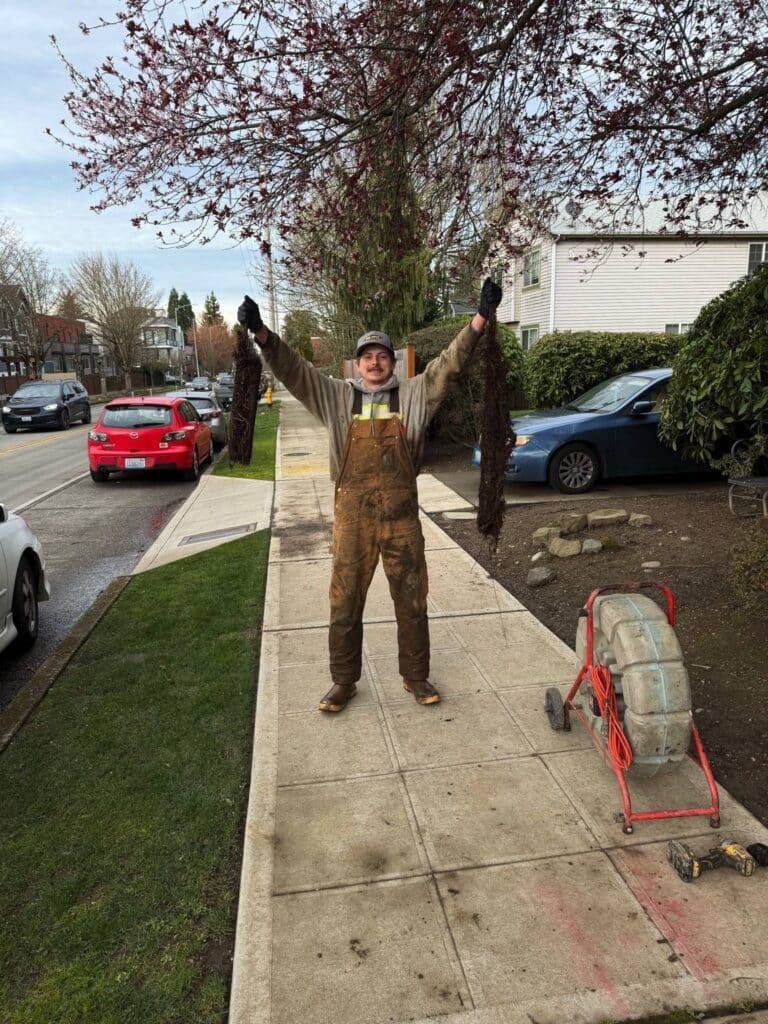
Tree roots removed from a clogged sewer line by the Bob Oates Plumbing, Sewer & Rooter team in Seattle
Common Signs of Tree Root Invasion
Tree roots often develop gradually, so the warning signs may appear long before a complete blockage occurs.
Symptoms of tree root intrusion include:
- Recurring drain backups
- Slow-draining sinks, tubs, or showers
- Toilets that frequently back up
- Gurgling sounds from drains
- Sewer odors inside or outside the home
- Wet or unusually green areas in the yard
- Multiple plumbing fixtures experiencing drainage problems at the same time
If these symptoms continue returning after standard drain cleaning, tree roots inside the sewer line may be the underlying cause.
Identifying Root Intrusion with a Sewer Camera Inspection
The most effective way to diagnose tree root invasion is with a professional sewer camera inspection.
A camera inspection not only confirms the presence of tree roots, but also reveals whether the pipe remains structurally sound or has developed cracks, separated joints, or other damage that may require repair.
Using specialized waterproof camera equipment, our technicians inspect the inside of the sewer line in real time. This allows us to identify the exact location of root intrusion, evaluate the condition of the pipe, and determine whether the sewer line can be restored or requires replacement.
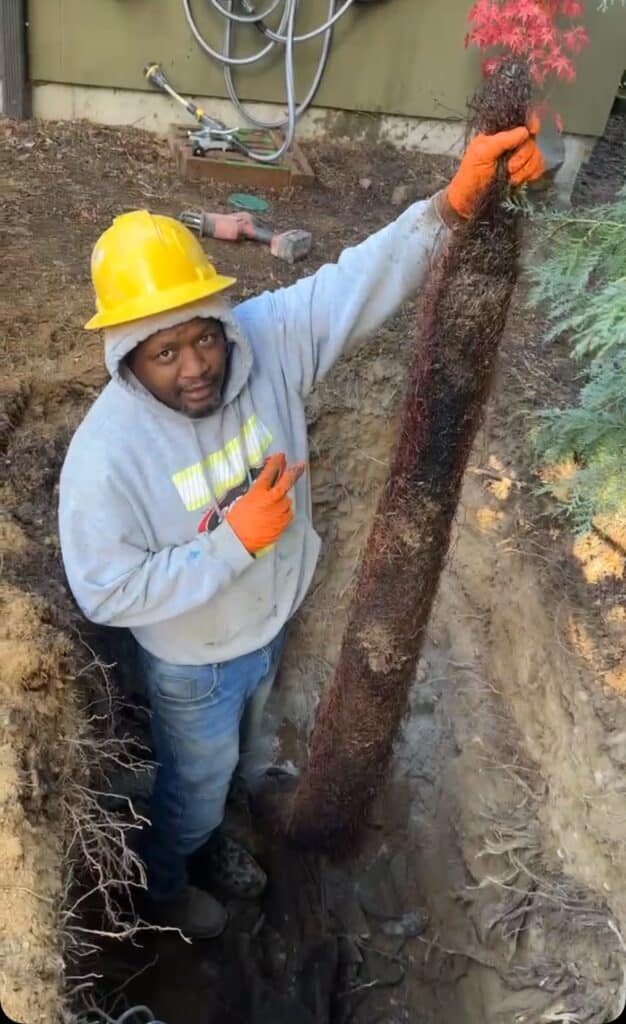
A Bob Oates technician shows the tree roots pulled from a clogged sewer line — a common cause of sewer backups in Seattle homes.
Removing Tree Roots from Sewer Pipes
Once root intrusion has been confirmed, several repair options may be available depending on the severity of the damage.
Hydro Jetting
For many sewer lines, hydro jetting is an effective first step. Highly pressurized water removes roots, grease, sludge, and other debris while cleaning the interior walls of the pipe. This restores proper flow and provides a clean surface for any additional repairs that may be recommended.
Mechanical Root Cutting
If larger or more established root masses are present, specialized root cutting equipment can mechanically remove roots that hydro jetting alone may not eliminate.
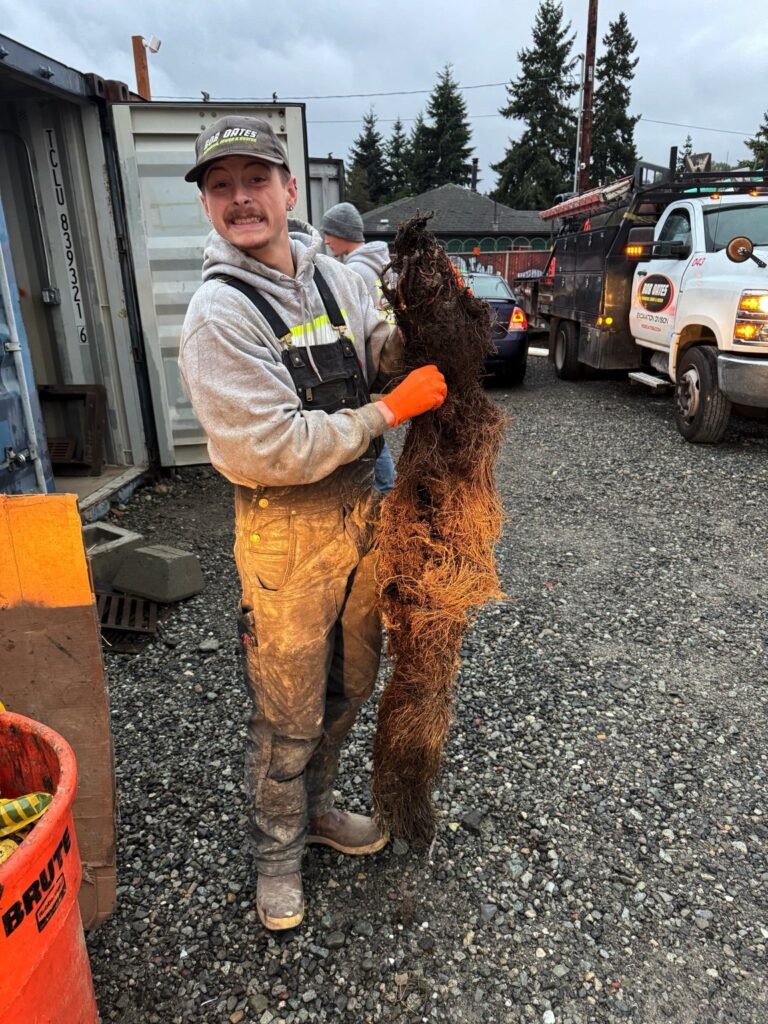
Large tree root cluster pulled from a clogged sewer line during professional drain cleaning service.
Long-Term Repair Solutions
Simply removing the roots may not permanently solve the problem if cracks or separated joints remain. Once roots have found a way into a sewer pipe, they often return unless the entry points are repaired.
Trenchless Sewer Pipe Lining
If the existing sewer line is structurally sound, cured-in-place pipe lining (CIPP) can restore the pipe from the inside. A resin-saturated liner is inserted into the existing sewer line and cured in place, creating a durable new pipe within the original one while sealing cracks, joints, and root entry points.
Because this trenchless sewer repair method typically requires little or no excavation, landscaping, driveways, patios, and sidewalks often remain undisturbed.
Pipe Bursting
When a sewer line has suffered extensive damage, pipe bursting may be the most appropriate solution.
This trenchless replacement method uses two access points while a bursting head fractures the existing pipe outward and simultaneously installs a new high-density polyethylene (HDPE) sewer pipe in its place. The result is a completely new sewer line with minimal disruption compared to traditional excavation.
Traditional Sewer Repair
Some sewer lines have collapsed, shifted significantly, or sustained damage that requires conventional excavation. When necessary, our technicians perform traditional sewer repair while recommending the most practical and cost-effective solution based on your property’s specific conditions.
Preventing Future Tree Root Problems
Although no sewer system is completely immune to root intrusion, homeowners can often reduce the likelihood of recurring problems by:
- Scheduling periodic sewer camera inspections for older sewer lines
- Addressing slow drains and recurring backups promptly
- Avoiding planting large trees directly above sewer lines
- Repairing damaged sewer pipes before roots become established
- Considering trenchless sewer lining when appropriate to seal future root entry points
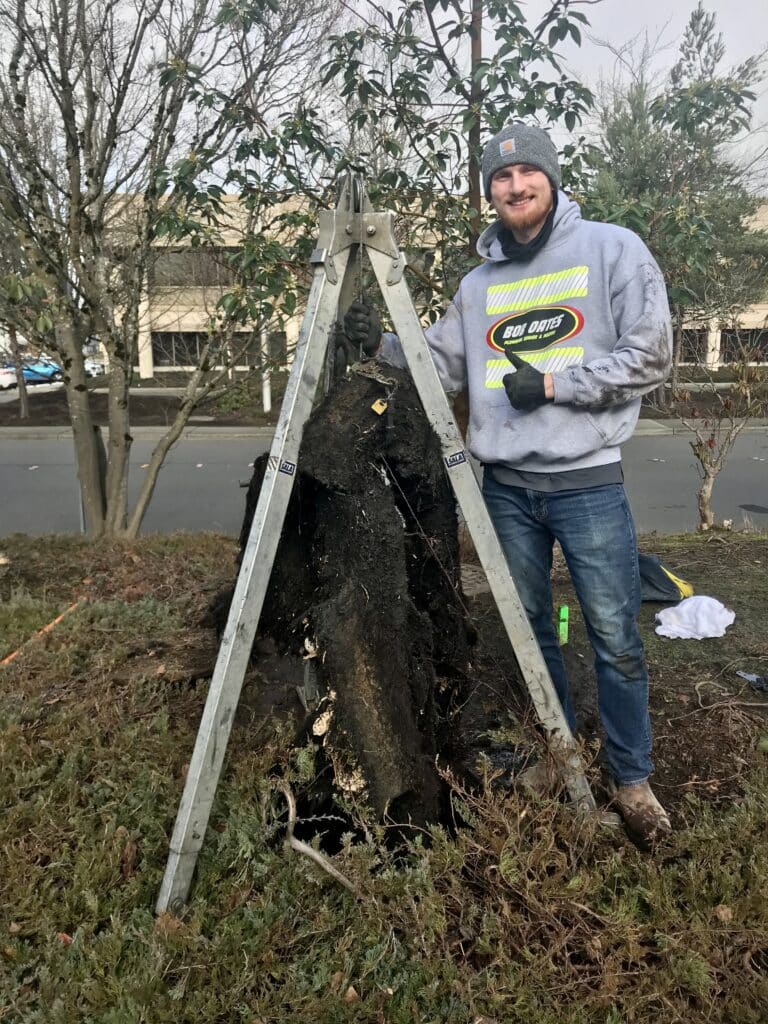
Bob Oates techs always get to the "root" of the problem — like this 300-pound tangle of tree roots pulled from a clogged sewer line to get the drains flowing again.
Trusted Sewer Repair Throughout Greater Seattle
At Bob Oates Plumbing, Sewer & Rooter, we provide comprehensive sewer camera inspections, hydro jetting, trenchless sewer repair, traditional sewer repair, sewer pipe lining, and pipe bursting throughout the Greater Seattle area.

If you’re experiencing recurring drain backups or suspect tree roots may be affecting your sewer line, our team can inspect the system, explain your repair options, and recommend the solution that best fits the condition of your sewer pipe.
Contact Bob Oates Today!
Give us a call or schedule an appointment online anytime — we’re here for you!
Our locally dispatched crews serve homes and businesses across King, Snohomish, and Pierce Counties, including:
- Ballard
- Bellevue
- Federal Way
- Fremont
- Greenwood
- Kent
- Lynnwood
- Magnolia
- Maple Leaf
- Phinney Ridge / Green Lake
- Queen Anne
- Renton
- Seattle
- Shoreline
- Tacoma
- Wallingford
- West Seattle

Frequently Asked Questions
How do you remove tree roots from a sewer line?
The best method depends on how severe the root intrusion has become. In many cases, hydro jetting uses highly pressurized water to cut through tree roots and flush away debris inside the sewer pipe. Larger root masses may require mechanical root cutting. After the roots have been removed, a sewer camera inspection helps determine whether the pipe should be repaired with trenchless sewer pipe lining, pipe bursting, or traditional sewer repair to prevent the roots from returning.
Can tree roots permanently damage a sewer line?
Yes. While roots usually enter through existing cracks, loose joints, or deteriorated sections of pipe, they continue expanding once inside. Over time, tree roots can widen cracks, separate pipe joints, restrict wastewater flow, and eventually contribute to partial or complete sewer line failure if left untreated.
Will tree roots grow back after they are removed?
They can. Removing tree roots restores proper flow, but if cracks or openings remain in the sewer pipe, roots may eventually return. Long-term solutions such as trenchless sewer pipe lining or pipe replacement help seal or replace damaged sections so tree roots no longer have a path into the sewer line.
What are the signs of tree roots in a sewer line?
Common signs of tree root intrusion include recurring drain backups, slow drains, toilets that frequently clog, gurgling sounds from plumbing fixtures, sewer odors, and wet or unusually green patches in the yard. A professional sewer camera inspection is the most reliable way to confirm whether tree roots are causing the problem.
Can a sewer camera inspection find tree roots in pipes?
Yes. A sewer camera inspection allows technicians to view the inside of the sewer line in real time, identify the exact location of tree root intrusion, evaluate the condition of the pipe, and recommend the most appropriate repair option. Camera inspections eliminate guesswork and help determine whether hydro jetting, trenchless sewer repair, or sewer replacement is the best long-term solution.

Rated 5 Stars by Johanna G.
via Yelp.com
"Nothing but great experiences with Bob Oates! Would highly recommend for all your sewer and plumbing needs! Honest, hard working company!"

Proud Member of BOMA





CALL (206) 789-4944
Serving the Greater Seattle Area