
4 Main Causes of Cracked Sewer Pipes

CALL (206) 789-4944
Serving the Greater Seattle Area

Cracked sewer pipes are a common cause of recurring drain backups, sewer odors, and unexpected plumbing repairs. While modern sewer lines are designed to last for decades, age, environmental conditions, tree roots, and installation issues can all contribute to pipe damage over time.
Fortunately, a professional sewer camera inspection can often identify a crack before it develops into a more serious problem. In many cases, modern trenchless sewer repair methods can restore or replace a damaged sewer line with minimal disruption to landscaping, driveways, patios, and other hard surfaces.
Below are four of the most common causes of cracked sewer pipes.
1. Improper Sewer Line Installation
Even a new sewer line can develop problems if it is not installed correctly. Improper bedding, insufficient support, poor connections, or incorrect grading can place stress on a pipe over time. As soil settles, unsupported sections may begin to sag, crack, or separate.
Working with an experienced Registered Side Sewer Contractor (RSSC) helps ensure sewer installations are completed according to local requirements and designed for long-term durability. While installation-related problems may not become apparent immediately, they can eventually lead to costly sewer repairs if left unaddressed.
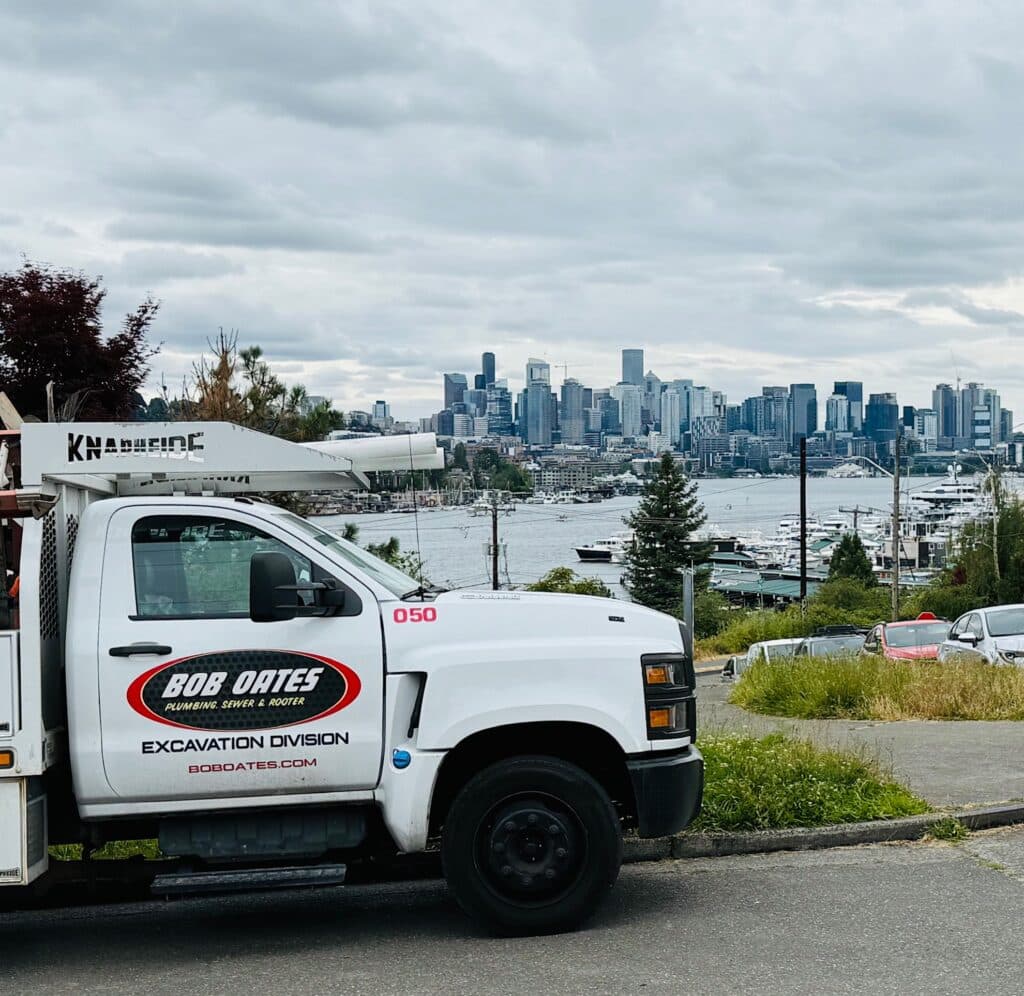
Out in the field with one of our excavation trucks — serving Greater Seattle with pride for over 30 years.
2. Tree Root Intrusion
Tree roots are one of the leading causes of sewer pipe damage throughout the Seattle area. Roots naturally seek moisture and nutrients, making sewer lines an attractive target. Once roots locate a small joint, crack, or weak point in a pipe, they can work their way inside and continue expanding.
Over time, root intrusion can widen existing cracks, restrict wastewater flow, and cause significant structural damage to the sewer line. A sewer camera inspection can identify root intrusion early, allowing homeowners to explore solutions such as hydro jetting, trenchless pipe lining, or sewer repair before the problem worsens.
If you’re planting new trees, it’s generally a good idea to avoid placing them directly above or near your sewer line whenever possible.
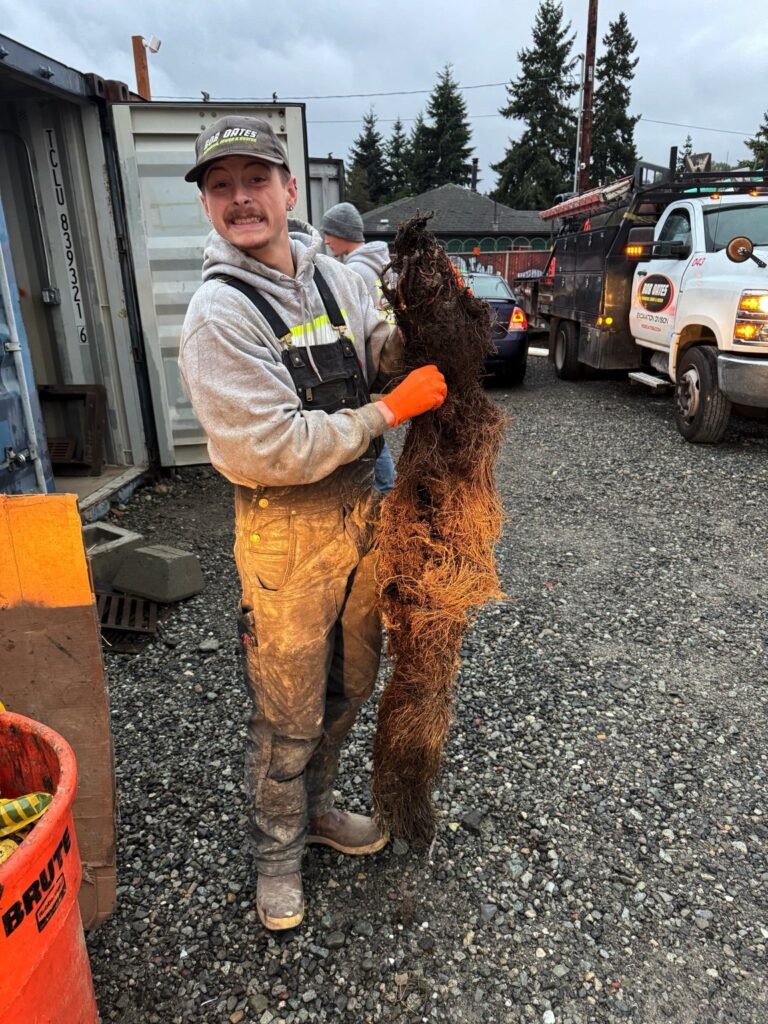
Large tree root cluster pulled from a clogged sewer line during professional drain cleaning service.
3. Pipe Deterioration and Age
Even durable sewer pipe materials eventually wear out. Older clay, cast iron, Orangeburg, and aging concrete pipes can become brittle, corroded, or weakened after decades underground.
While some household products and chemical drain cleaners may contribute to deterioration over time, age-related wear is often the primary factor. As pipes weaken, they become more susceptible to cracking, root intrusion, and structural failure.
Routine sewer inspections can help identify developing problems before they lead to backups, leaks, or emergency repairs.
4. Shifting Soil and Ground Movement
Seattle-area sewer lines are constantly exposed to changing ground conditions. Heavy rainfall, erosion, settling soil, nearby construction activity, and natural ground movement can place pressure on underground pipes.
As the surrounding soil shifts, sewer pipes may become misaligned, stressed, or cracked. In some cases, sections of pipe can separate entirely, creating areas where roots and debris can enter the line.
Depending on the extent of the damage, trenchless sewer pipe repair, pipe lining, or pipe bursting may provide effective solutions without extensive excavation.

On this trenchless sewer repair job, Bob Oates techs installed 70 feet of 4-inch liner using blue light curing — restoring service in hours with no digging required. Traditional methods can take up to 48 hours and involve major excavation.
How Do You Know If You Have a Cracked Sewer Pipe?
A cracked sewer pipe isn’t always visible from the surface. However, there are several warning signs homeowners should watch for:
- Frequent drain backups
- Slow drains throughout the home
- Sewage odors indoors or outdoors
- Wet or soggy areas in the yard
- Unusually lush patches of grass
- Recurring root intrusion
- Increased pest activity near the damaged line
A sewer camera inspection is often the fastest and most accurate way to determine whether a sewer pipe has cracked and to evaluate the most appropriate repair options.
Professional Sewer Inspection and Repair
If you’re experiencing recurring drain problems, sewer odors, or signs of underground pipe damage, a professional sewer camera inspection can help identify the source of the issue.
At Bob Oates Plumbing, Sewer & Rooter, our team provides sewer inspections, trenchless sewer repair — including cured-in-place pipe lining (CIPP), pipe bursting, and traditional sewer repair services throughout the Greater Seattle area. After evaluating the condition of your sewer line, we’ll explain the available repair options and recommend the most practical solution for your property and budget.
Give us a call or fill out our contact form to schedule a free estimate for your property.
Our locally dispatched crews serve homes and businesses across King, Snohomish, and Pierce Counties and all surrounding service areas, including:
- Ballard
- Bellevue
- Federal Way
- Fremont
- Greenwood
- Kent
- Lynnwood
- Magnolia
- Maple Leaf
- Phinney Ridge / Green Lake
- Queen Anne
- Renton
- Seattle
- Shoreline
- Tacoma
- Wallingford
- West Seattle
Frequently Asked Questions About Cracked Pipes
What causes a sewer pipe to crack?
A sewer pipe may crack because of age, corrosion, tree root intrusion, improper installation, shifting soil, or ground movement. A sewer camera inspection can help identify the cause and extent of the damage.
Can a cracked sewer pipe be repaired without digging?
In many cases, yes. Trenchless sewer repair methods such as pipe lining and pipe bursting can often repair or replace damaged sewer pipes with minimal disruption to landscaping, driveways, and other surfaces.
How do plumbers find a cracked sewer pipe?
Plumbers typically use a sewer camera inspection to locate cracks, root intrusion, offsets, corrosion, and other hidden sewer line problems without excavation.
Further Reading


Rated 5 Stars by Johanna G.
via Yelp.com
"Nothing but great experiences with Bob Oates! Would highly recommend for all your sewer and plumbing needs! Honest, hard working company!"

Proud Member of BOMA
CALL (206) 789-4944
Serving the Greater Seattle Area