
5 Plumbing Tips for Fall

CALL (206) 789-4944
Serving the Greater Seattle Area

Fall brings cooler temperatures, heavier rainfall, and falling leaves to the Seattle area. It’s also an excellent time for homeowners to check their plumbing, drainage, and sewer systems before winter arrives.
A little preventive maintenance now can help reduce the risk of clogged drains, sewer backups, water damage, and unexpected plumbing repairs.
At Bob Oates Plumbing, Sewer & Rooter, we help Greater Seattle homeowners prepare for seasonal plumbing challenges.
Here are five practical tips to keep your plumbing working reliably throughout fall and winter.
1. Clear Gutters, Downspouts, and Drainage Lines
Falling leaves, twigs, and other debris can quickly accumulate in gutters and downspouts. During heavy rainfall, these obstructions prevent water from draining properly and may cause it to overflow near your home’s foundation.
Start with a few basic maintenance steps:
- Remove leaves and debris from gutters and downspout openings.
- Check that downspouts direct water away from your foundation.
- Look for standing water or unusually slow drainage around your property.
- Watch for water backing up where downspouts connect to underground drainage pipes.
Underground drainage lines deserve attention, too. Leaves, sediment, and debris can accumulate inside buried pipes, restricting water flow during periods of heavy rainfall.
If water backs up repeatedly or an underground drain appears blocked, professional drain cleaning can help identify and clear the obstruction.
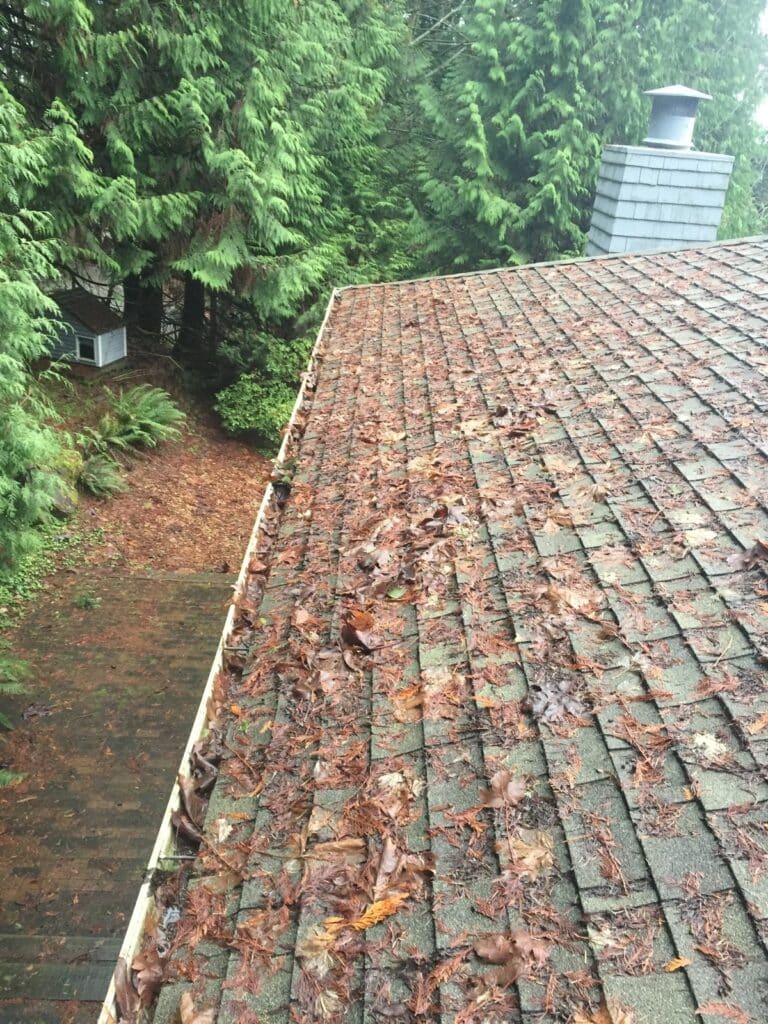
Wet leaves and roof debris collect in gutters during Seattle’s rainy season, often leading to clogged downspout lines.
2. Watch for Tree Roots in Sewer Pipes
Seattle’s mature trees are a defining feature of our neighborhoods, but their roots can create serious problems for underground sewer lines.
Roots naturally grow toward moisture and may enter older sewer pipes through cracks, deteriorated joints, or other openings. Once inside, they can expand, collect debris, and restrict wastewater flow.
Common warning signs include:
- Drains that clog repeatedly
- Gurgling sounds from toilets or drains
- Multiple fixtures draining slowly
- Wastewater backing up into lower-level plumbing fixtures
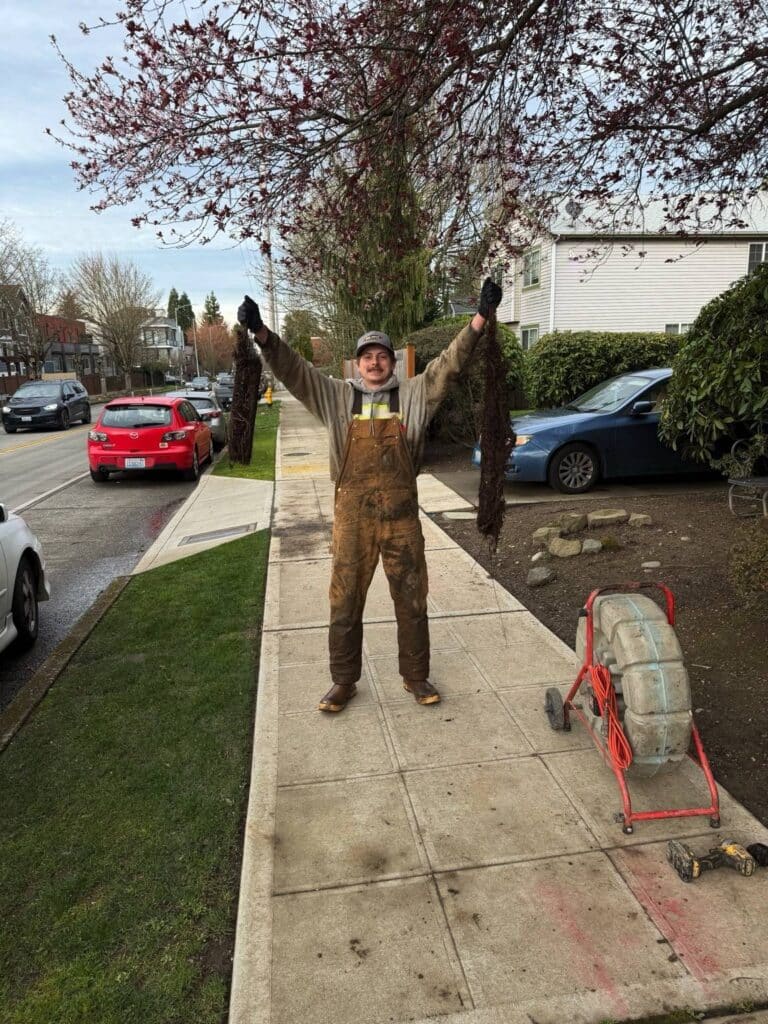
Tree roots removed from a clogged sewer line by the Bob Oates Plumbing, Sewer & Rooter team in Seattle
A professional sewer camera inspection can locate tree root intrusion and help determine whether the pipe has sustained structural damage.
Depending on the condition of the line, technicians may recommend mechanical root removal, hydro jetting, or sewer repair.
3. Inspect and Maintain Your Water Heater
As temperatures drop, incoming water becomes colder, and your water heater may need more energy to bring it up to the desired temperature.
Fall is a convenient time to check its condition and address potential maintenance needs.
Consider these simple steps:
- Look for moisture, corrosion, or leaks around the tank and connections.
- Listen for unusual popping or rumbling sounds that may indicate sediment buildup.
- Check the manufacturer’s recommended maintenance schedule.
- Verify that the water temperature is set appropriately for your household.
For many homes, 120°F is a commonly recommended water heater setting, although individual needs and manufacturer requirements may vary.

New Rheem gas water heater installation by Bob Oates Plumbing, Sewer & Rooter.
Sediment can accumulate inside tank-style water heaters over time, reducing efficiency and contributing to wear. Periodic flushing may help, but older units or tanks with an uncertain maintenance history should be evaluated before attempting this procedure.
Bob Oates is proud to offer both traditional and tankless water heater repair and installation.
4. Test Your Sump Pump Before Heavy Rain Arrives
For Seattle-area homes with basements or crawl spaces, a properly functioning sump pump can provide important protection against groundwater intrusion.
Fall is an excellent time to confirm that the system is ready for prolonged rainfall.
Start by checking the sump basin for debris and making sure the pump’s float mechanism moves freely. If the manufacturer’s instructions permit, carefully add water to the basin to verify that the pump activates and removes water.
Also check that:
- The discharge line is clear and directs water away from the foundation.
- The pump operates without unusual noises or excessive vibration.
- Electrical connections remain dry and secure.
- Any installed battery backup is functioning properly.
A sump pump is only useful when it operates reliably during the conditions it’s designed to handle.
If your sump pump runs continuously, cycles irregularly, or fails to activate, schedule an inspection before the rainy season intensifies.
For homes susceptible to power outages, a battery backup system may provide additional protection.
5. Schedule Sewer Inspection and Cleaning When Needed
Fall is also a good time to address sewer line problems before holiday gatherings and increased household plumbing use.
Older sewer lines may contain accumulated grease, debris, tree roots, or damaged sections that restrict wastewater flow. These problems can become especially inconvenient when additional guests place greater demands on the plumbing system.
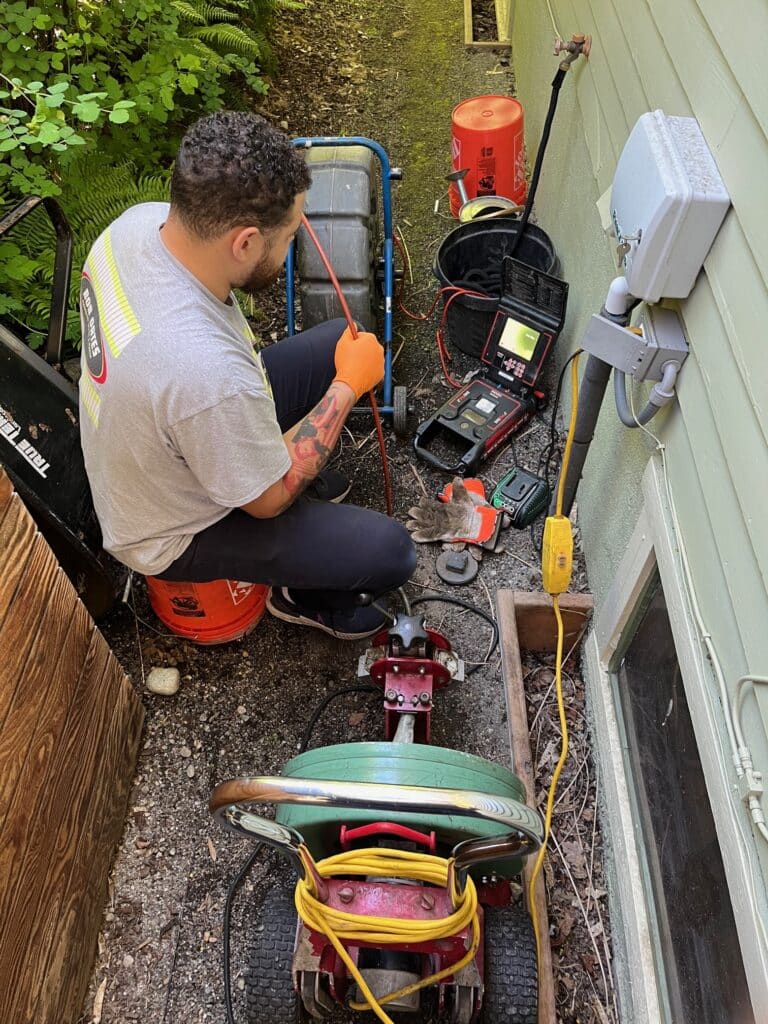
A Bob Oates technician monitors a live sewer camera feed while inspecting underground drain lines.
A professional sewer camera inspection provides a detailed view of the pipe’s interior, helping technicians locate obstructions, identify damage, and recommend appropriate maintenance.
Depending on the findings, cleaning options may include:
Mechanical drain cleaning: Uses specialized equipment to clear obstructions and restore wastewater flow.
Hydro jetting: Uses high-pressure water to remove grease, sludge, debris, and certain root accumulations from suitable pipes.
Hydro jetting can be especially effective for thoroughly cleaning pipe interiors, but technicians should first evaluate the condition of the sewer line to determine whether the method is appropriate.
Addressing these problems early can help reduce the likelihood of a disruptive sewer backup during the colder months.
Prepare Your Plumbing for Seattle’s Rainy Season
Seasonal plumbing maintenance helps protect your home, extend the useful life of plumbing equipment, and identify developing problems before they require more extensive repairs.
From clearing underground drainage lines and removing tree roots to inspecting sewer pipes, maintaining water heaters, and servicing sump pumps, a little preparation can make a meaningful difference. And Bob Oates is here to help — our family-run team has served Greater Seattle homeowners for more than 35 years.
Have questions about your plumbing or sewer system before winter arrives? Give us a call(opens in new tab) or schedule an appointment online(opens in new tab) anytime — we’re here for you!
Our locally dispatched crews serve homes and businesses across King, Snohomish, and Pierce Counties, including:
- Ballard(opens in new tab)
- Bellevue(opens in new tab)
- Federal Way(opens in new tab)
- Fremont(opens in new tab)
- Greenwood(opens in new tab)
- Kent(opens in new tab)
- Lynnwood(opens in new tab)
- Magnolia(opens in new tab)
- Maple Leaf(opens in new tab)
- Phinney Ridge / Green Lake(opens in new tab)
- Queen Anne(opens in new tab)
- Renton(opens in new tab)
- Seattle(opens in new tab)
- Shoreline(opens in new tab)
- Tacoma(opens in new tab)
- Wallingford(opens in new tab)
- West Seattle


Rated 5 Stars by Johanna G.
via Yelp.com
"Nothing but great experiences with Bob Oates! Would highly recommend for all your sewer and plumbing needs! Honest, hard working company!"

Proud Member of BOMA
CALL (206) 789-4944
Serving the Greater Seattle Area