
Pipe Issues Seattle Homeowners Shouldn’t Ignore
CALL (206) 789-4944
Serving the Greater Seattle Area
A hidden pipe problem can turn into a major sewer repair before most homeowners even realize something is wrong.
Slow drains, recurring backups, foul odors, or unexplained wet spots in the yard are often signs that a sewer line is beginning to fail. And in many Seattle-area homes — especially older properties with clay or cast iron sewer pipes — these issues tend to worsen over time if left untreated.
The good news? Not every sewer problem requires excavation.
At Bob Oates Plumbing, Sewer & Rooter, we use advanced sewer camera inspections and trenchless sewer pipe lining technology to diagnose and repair many common pipe issues without digging up your yard, driveway, or landscaping.
Here are some of the most common pipe problems homeowners should watch for:
Cracked Sewer Pipes
Cracks in sewer pipes are one of the most common causes of leaks and recurring drainage problems.
Pipes can crack due to:
- aging materials
- shifting soil
- root intrusion
- corrosion
- repeated pressure from blockages
Even a small crack can allow wastewater to leak into the surrounding soil while also letting groundwater seep into the pipe. Over time, this can lead to:
- slow drains
- sewer odors
- backups
- soft or sunken areas in the yard
- worsening structural pipe damage
In many cases, trenchless sewer pipe lining can seal cracks from the inside without replacing the entire pipe.
Using a durable epoxy liner, we create a new pipe within the old one — restoring flow and preventing future leaks.
Corroded or Aging Pipes
Many older Seattle homes still have original clay, cast iron, or concrete sewer lines.
Over decades of use, these materials can deteriorate due to:
- moisture exposure
- mineral buildup
- corrosion
- shifting ground conditions
As pipes weaken, they become more vulnerable to cracking, root intrusion, and sewer backups.

A sewer line failure is often visible as a lush green stripe cutting through an otherwise brown yard.
Signs of aging sewer pipes may include:
- recurring drain problems
- rusty water
- foul odors
- frequent clogs
- sewer backups during heavy use
A professional sewer camera inspection can determine whether the pipe can be restored with trenchless lining or whether replacement is necessary.
For many structurally stable pipes, pipe relining offers a long-lasting alternative to excavation and can extend the life of the system for decades.
Tree Root Intrusion
Tree root invasion is one of the leading causes of sewer line damage throughout the Greater Seattle area.
Roots naturally seek out moisture and often enter sewer pipes through:
- small cracks
- loose joints
- aging connections
- deteriorated pipe walls
Once inside, roots continue to expand and can eventually block wastewater flow completely.
Common warning signs include:
- gurgling drains
- multiple clogged fixtures
- slow drainage throughout the home
- sewage backups
- recurring drain cleaning calls
After clearing roots from the line, trenchless sewer pipe repair can help seal vulnerable joints and cracks to reduce the chances of roots returning.
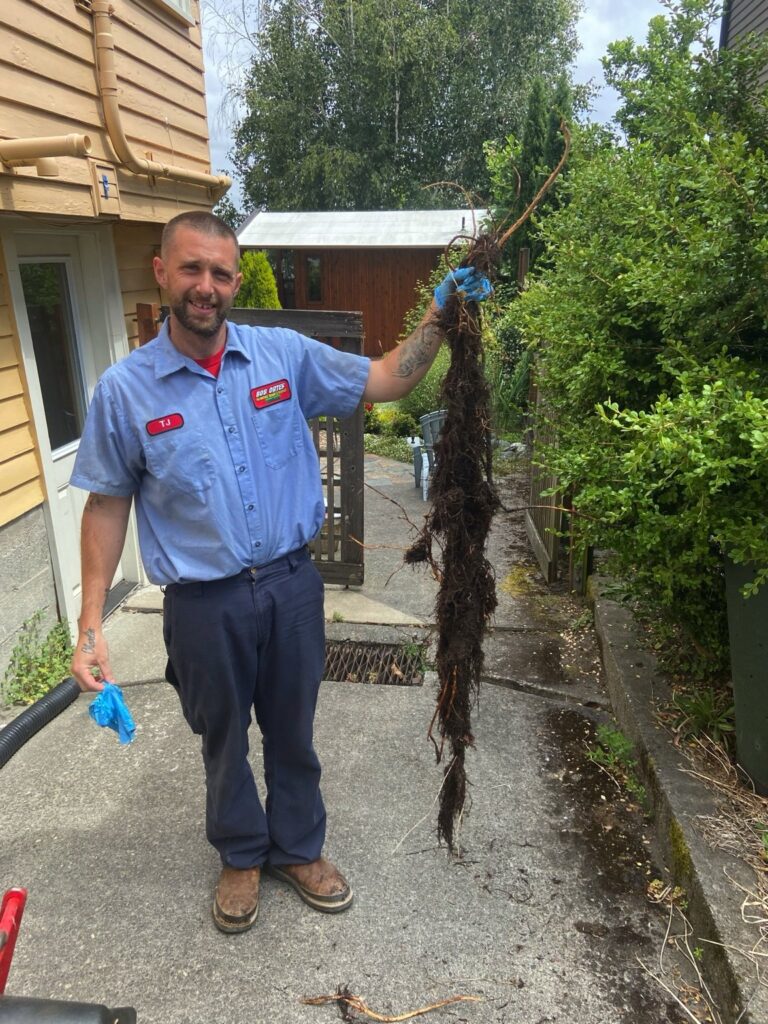
Tree roots extracted from a sewer pipe after clearing a major blockage.
Pipe Bellies and Low Spots
A sewer line belly — sometimes called a sag — occurs when a section of pipe sinks over time and creates a low area where water and waste collect.
This standing water can lead to:
- recurring clogs
- sludge buildup
- slow drains
- foul odors
- premature pipe deterioration
Bellies are commonly caused by:
- soil settlement
- poor installation
- erosion
- aging underground infrastructure
A sewer camera inspection is often the best way to identify a belly in the line.
Depending on the severity, some low spots may require excavation, while surrounding sections of pipe may still qualify for trenchless repair methods.
Loose or Rattling Pipes
Not all pipe issues occur underground.
If you hear rattling or banging sounds when using faucets or flushing toilets, it could indicate loose pipe connections or unsecured plumbing lines inside the home.
Over time, vibration and repeated movement can:
- weaken joints
- create leaks
- damage surrounding walls or cabinets
- contribute to pipe failure
While rattling pipes are often associated with interior plumbing rather than sewer lines, they should still be inspected before small issues become costly repairs.
Minor Pipe Separation or Shifting
Pipes can gradually shift due to:
- soil movement
- nearby construction
- earthquakes
- ground settlement
- aging joints
When sections of pipe begin to separate, wastewater flow becomes disrupted and roots can enter the line more easily.
If the pipe still maintains its overall shape, trenchless sewer pipe lining may be able to reinforce and stabilize the damaged section without excavation.
How Sewer Camera Inspections Help Diagnose Pipe Problems
Many sewer issues develop underground and out of sight.
That’s why the first step in diagnosing a sewer problem is typically a professional sewer camera inspection.
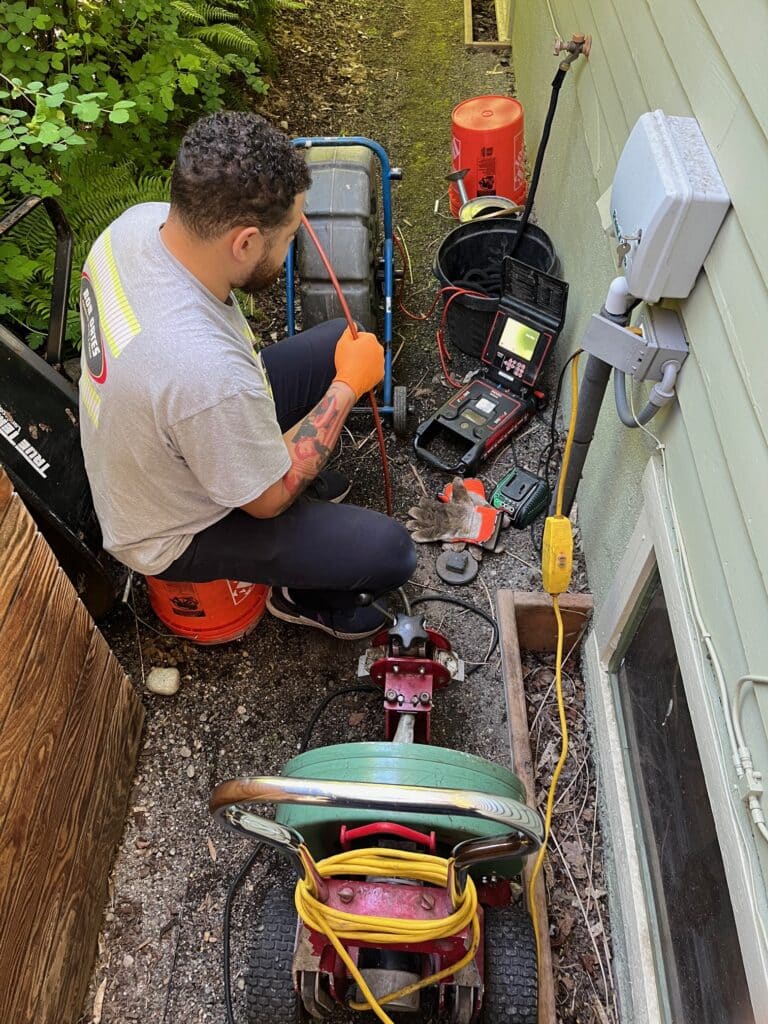
A Bob Oates technician monitors a live sewer camera feed while inspecting underground drain lines.
Using a high-resolution waterproof camera, our technicians inspect the inside of the pipe in real time to identify:
- cracks
- root intrusion
- corrosion
- standing water
- offsets
- blockages
- pipe deterioration
This allows us to recommend the most effective repair option — including whether trenchless sewer pipe lining is possible.
Pipe Lining vs. Traditional Sewer Repair
| Feature | Trenchless Pipe Lining | Traditional Excavation Repair |
|---|---|---|
| Digging Required | Minimal or none | Requires trenching |
| Landscape Disruption | Very low | Can damage yards, driveways, and patios |
| Project Timeline | Often completed in one day | May take several days or longer |
| Pipe Longevity | Can last 50+ years | Depends on replacement material |
| Best For | Cracks, roots, corrosion, minor separation | Collapsed or severely damaged pipes |
Sewer Pipe Issues? Bob Oates Can Help
At Bob Oates Plumbing, Sewer & Rooter, we’ve helped Seattle-area homeowners diagnose and repair sewer problems for more than 30 years.
From sewer camera inspections and hydro jetting to complete drain cleaning services and full sewer repair, our team uses modern technology to solve problems quickly and with as little disruption as possible.
If you’re noticing warning signs of a sewer or drain problem, don’t wait for a backup or major failure.
Call Bob Oates or schedule an appointment for a professional sewer inspection and learn whether trenchless sewer repair is the right solution for your home.
Frequently Asked Questions About Pipe Issues & Sewer Repair
What are the signs of a damaged sewer pipe?
Common signs include slow drains, recurring backups, sewer odors, wet spots in the yard, gurgling pipes, and multiple clogged fixtures.
Can cracked sewer pipes be repaired without digging?
In many cases, yes. Trenchless sewer pipe lining can repair cracks from inside the pipe without excavation.
How do tree roots get into sewer pipes?
Roots enter through small cracks, loose joints, or aging pipe connections where moisture escapes.
What is a sewer camera inspection?
A sewer camera inspection uses a waterproof camera to inspect the inside of underground sewer pipes and identify problems like cracks, roots, corrosion, and blockages.
How long does trenchless pipe lining last?
Most epoxy pipe lining systems are designed to last 50 years or more when properly installed.
When is excavation still necessary?
Excavation may be required if a sewer pipe has completely collapsed, severely shifted, or cannot structurally support lining.


Rated 5 Stars by Johanna G.
via Yelp.com
"Nothing but great experiences with Bob Oates! Would highly recommend for all your sewer and plumbing needs! Honest, hard working company!"

Proud Member of BOMA
CALL (206) 789-4944
Serving the Greater Seattle Area