
Signs You Need to Replace Your Sewer Line

CALL (206) 789-4944
Serving the Greater Seattle Area
When sewer lines fail, the signs often start out small — a slow drain, a damp patch in the yard, or an unpleasant odor you can’t quite place. But if ignored, these issues quickly escalate into costly repairs, health hazards, and even structural damage to your home.
Knowing when it’s time for a full sewer line replacement (instead of another short-term repair) can save you stress, money, and your property’s foundation.
Here in Seattle, older homes and shifting Northwest soil make sewer line failures more common than most homeowners expect. Below, we’ll cover the most important signs you need to replace your sewer line, why these problems happen, and the modern solutions available to fix them.
Why Sewer Lines Fail
Several factors contribute to sewer line deterioration:
- Tree root intrusion — Roots seek moisture and nutrients, infiltrating even the tiniest cracks and forcing pipes apart. (Learn more about this with our dedicated page on tree root invasion.)
- Aging pipe materials — Many older Seattle homes still rely on cast iron, terracotta, or concrete pipes, which corrode, crumble, or collapse after decades of use.
- Soil and ground shifts — Expansive clay soils, seismic activity, and seasonal ground movement all put pressure on sewer lines.
- Buildup and corrosion — Years of grease, wipes, and waste buildup create clogs that stress and crack old pipes.
- Weather and natural disasters — Heavy rains, flooding, and earthquakes can break pipes or shift them out of alignment.
Signs It’s Time to Replace Your Sewer Line
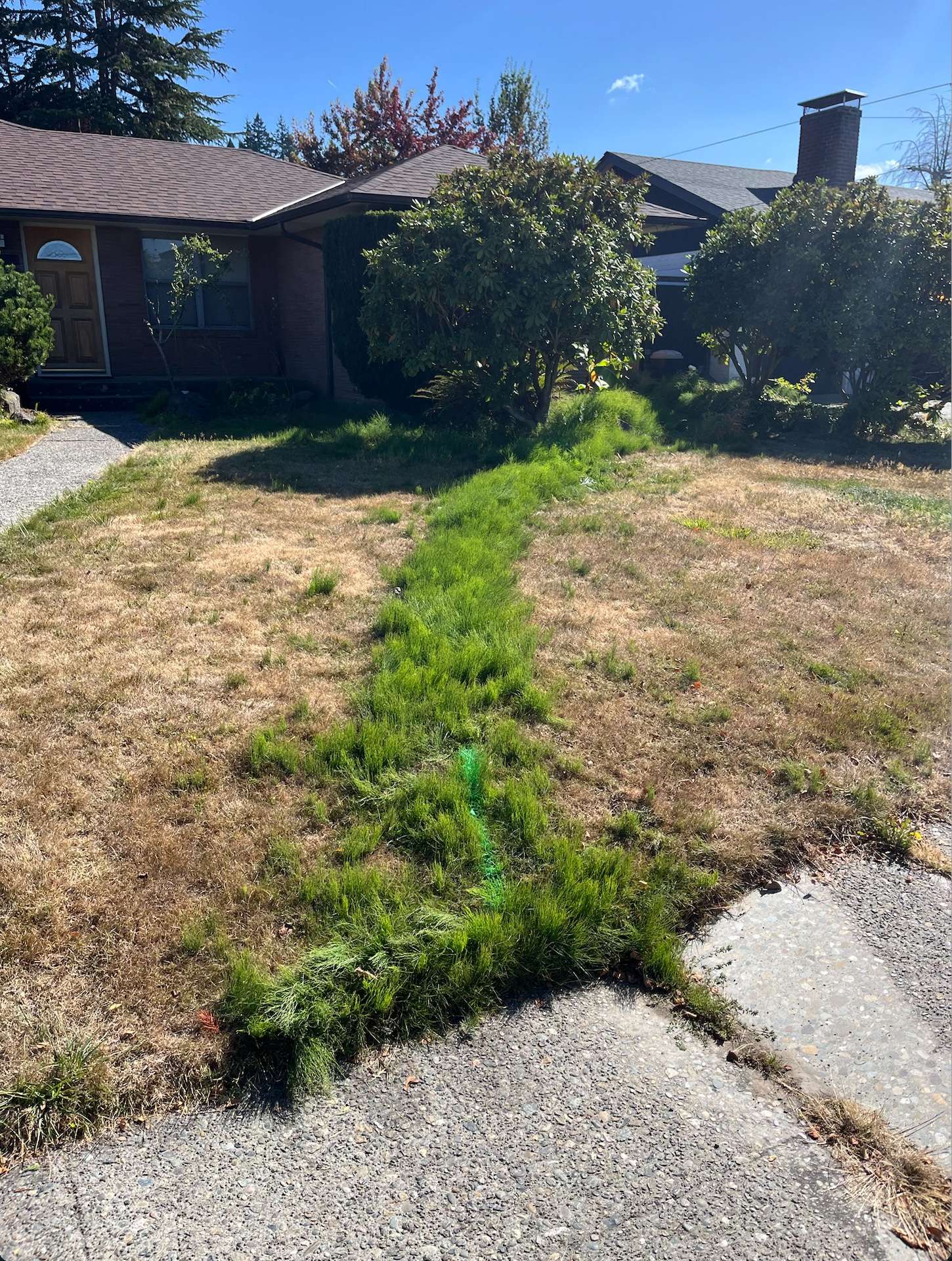
1. A Green Stripe in the Lawn
One of the most visible warning signs is an unusually lush strip of grass across your yard — especially if the rest of the lawn looks dry or brown. This happens when leaking sewage “fertilizes” the soil above a cracked or broken pipe. The photo above shows a real example from a Bob Oates customer: the sewer line failure is visible just by looking at the grass.
2. Soggy or Sunken Yard
Persistent puddles, spongy ground, or sunken areas in your yard (even when it hasn’t rained) suggest a serious underground leak. In some cases, sewage can pool on the surface, creating both a mess and a health hazard.
3. Multiple Clogged Fixtures
If sinks, toilets, and showers all clog or back up at the same time, it’s often more than a simple blockage. It usually means your main sewer line is sagging, cracked, or overwhelmed — a clear sign that replacement may be necessary.
4. Foul Odors Indoors or Outside
The smell of raw sewage (sulfur, methane, or a musty odor) is hard to ignore. It means sewage or sewer gases are escaping the pipe, and sealing the cracks isn’t enough. A damaged line may need to be replaced before the leaks worsen.
5. Mold, Mildew, or Musty Air
Broken or leaking sewer lines raise indoor humidity and moisture levels. Over time, you may notice mold on walls, damp carpets, or mildew odors. Not only is this unpleasant, but it can also cause health issues.
6. Cracks in Walls or Foundation Damage
Sewer leaks can undermine the soil supporting your home, leading to foundation shifts and cracks spreading upward from the ground. These structural issues are serious red flags that your sewer line isn’t just leaking — it’s failing.
7. Pest and Rodent Activity
Damaged sewer lines can attract unwanted guests. Flies, gnats, or even rodents drawn to moisture and sewage may suddenly appear in or around your home. If pest problems persist, your sewer system may be the hidden culprit.
Repair vs. Replacement: What’s the Difference?
Not every sewer problem requires a full replacement. Repairs can sometimes fix minor cracks or localized issues. But when your system shows multiple warning signs, or if pipes are outdated, corroded, or collapsing, replacement is the only long-term solution.
Fortunately, replacing your sewer line doesn’t always mean tearing up your yard. At Bob Oates, we specialize in trenchless sewer repair methods, including:
- Trenchless pipe lining: Installing a durable epoxy liner inside your existing pipe, creating a new “pipe within a pipe.”
- Pipe bursting: Breaking apart the old line while simultaneously pulling in a brand-new, root-resistant pipe.
These methods minimize disruption, preserve landscaping, and often take just one day to complete. For severe cases, open trench excavation may still be required — but our team will always recommend the most efficient and cost-effective option.
Why Choose Bob Oates Sewer & Rooter?
With over 30 years of serving Seattle homeowners, Bob Oates Sewer & Rooter has built a reputation for reliable, family-owned service and cutting-edge trenchless technology. We offer:
- Free sewer camera inspections to pinpoint sewer problems.
- Fast, minimally invasive trenchless repair and replacement.
- A team of experts trained in the latest technology.
- Honest recommendations tailored to your home and budget.
Conclusion
From lush green grass stripes to persistent sewer odors, the signs of a failing sewer line aren’t always subtle. The good news: you don’t have to wait until things get worse. Acting quickly can save you from higher costs, structural damage, and health hazards.
If you’ve noticed any of these signs, call or contact the trusted local experts at Bob Oates. We’ll inspect your system, explain your options, and restore peace of mind with lasting solutions.


Rated 5 Stars by Johanna G.
via Yelp.com
"Nothing but great experiences with Bob Oates! Would highly recommend for all your sewer and plumbing needs! Honest, hard working company!"

Proud Member of BOMA
CALL (206) 789-4944
Serving the Greater Seattle Area