
What Causes Recurring Drain Clogs?
CALL (206) 789-4944
Serving the Greater Seattle Area
A clogged drain every once in a while isn’t unusual. But if the same drain keeps clogging, or you’re regularly dealing with slow drains and backups throughout your home, there may be more going on inside your plumbing system.
Recurring drain clogs often mean that the original blockage wasn’t completely removed — or that another problem inside the drain or sewer line is causing it to return.
At Bob Oates Plumbing, Sewer & Rooter, our goal is to determine why clogs are happening in the first place so we can recommend the right solution.
Why Does My Drain Keep Clogging?
A recurring clog can have several causes, ranging from everyday buildup to problems with the pipe itself.
Grease, Soap and Other Buildup
Kitchen and bathroom drains gradually collect material along the inside walls of the pipe.
Common culprits include:
- Grease, fats and cooking oils
- Soap residue
- Hair
- Food particles
- Mineral deposits
- Other household debris
Over time, this buildup can narrow the opening inside the pipe. A drain snake may punch through enough of the blockage to restore flow, but material left along the pipe walls can make it easier for another clog to form.
Professional drain cleaning can remove more stubborn buildup and help restore better flow through the line.
Hair and Debris Deeper in the Drain Line
Sometimes the problem isn’t immediately beneath the sink, shower or tub.
Hair, soap, grease and other materials can accumulate farther down the drain system, where plunging or other basic DIY methods may not reach them.
If you’ve cleared the area around the fixture but the drain continues to slow down or clog, a deeper blockage may be responsible.
The Previous Clog Wasn’t Completely Removed
One of the simplest explanations for a recurring clog is that the original blockage was only partially cleared.
Drain snaking is extremely useful for many types of blockages. A snake can create an opening through a clog and restore drainage, but depending on what’s inside the pipe, it may not remove all of the material coating the pipe walls.
That’s one reason a drain may work normally for a while and then gradually slow down again.
For heavier buildup, hydro jetting may be recommended. Hydro jetting uses high-pressure water to clean the inside of the pipe more thoroughly rather than simply creating a path through the blockage.
Tree Roots Have Entered the Pipe
Tree root invasion is another potential cause of stubborn or recurring drain and sewer problems, particularly in older underground lines.
Roots naturally seek moisture. If a sewer pipe has a crack, deteriorated joint or other opening, small roots can enter the line and continue growing inside it.
Once established, the roots can:
- Restrict wastewater flow
- Catch toilet paper and other debris
- Contribute to repeated blockages
- Worsen existing pipe damage
Clearing the immediate obstruction may restore flow, but if roots are entering through a damaged section of pipe, the problem can eventually return.
At Bob Oates, we employ the most effective way to diagnose tree root invasion: by conducting a professional sewer camera inspection.
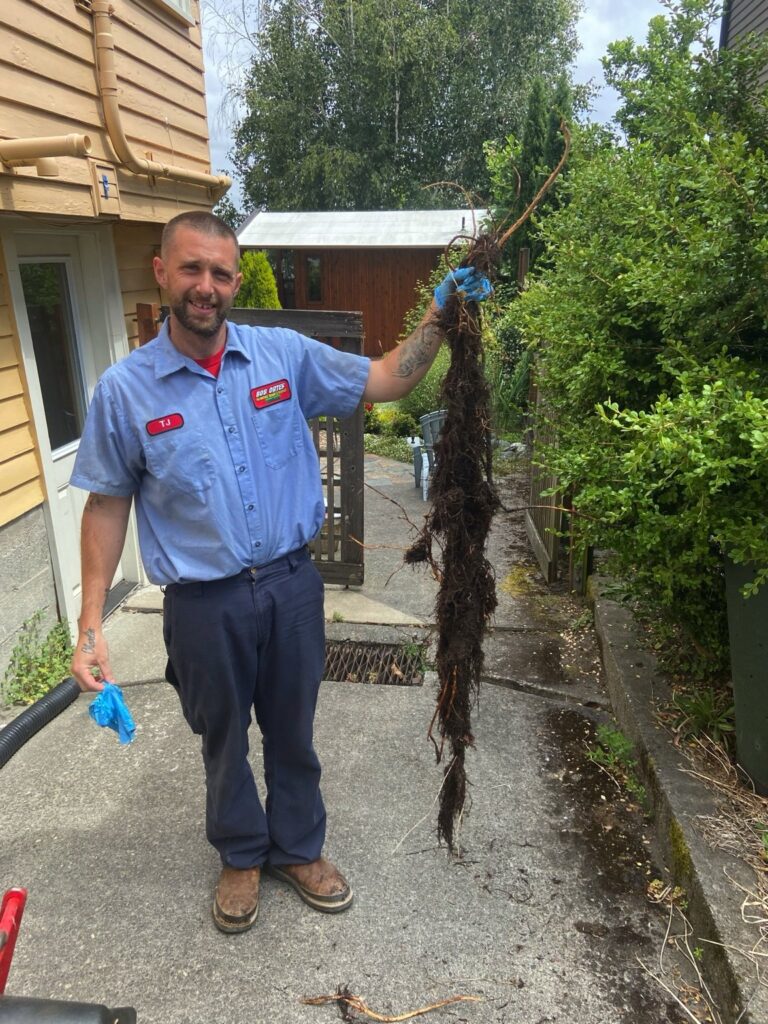
Tree roots extracted from a sewer pipe after clearing a major blockage.
The Pipe May Be Cracked, Damaged or Misaligned
Sometimes recurring clogs aren’t primarily a cleaning problem at all.
Cracks, separated or misaligned joints, deteriorated pipe, and other structural defects can interfere with normal flow or create places where waste and debris repeatedly collect.
In these situations, repeatedly clearing the drain may provide temporary relief without correcting the underlying problem.
A professional camera inspection can help identify structural damage and determine whether sewer repair or a trenchless repair method may be appropriate.
A Sagging Pipe Can Collect Waste
A section of pipe that has settled or developed a low spot — sometimes called a sewer line belly — can also contribute to recurring drainage problems.
Instead of flowing consistently through the line, water and waste can collect in the low area. Sediment and debris may gradually accumulate there, increasing the likelihood of another blockage.
Because the problem is related to the position or condition of the pipe, cleaning alone may not provide a permanent solution.
Something That Shouldn’t Be There Is Causing the Clog
Not every recurring clog is caused by gradual buildup.
Foreign objects and materials that don’t break down easily can become lodged inside a drain or sewer line and repeatedly catch additional debris.
Toilets are especially vulnerable. Items such as wipes — even products marketed as “flushable” — paper towels, hygiene products and other non-toilet-paper materials can contribute to stubborn blockages.

A job well done! One of our techs giving the thumbs up after finishing a bathroom repair.
One Clogged Drain or Several? The Difference Matters
Where the problem occurs can provide an important clue about what’s causing it.
If one sink, shower or tub repeatedly clogs, the problem may be isolated to that fixture or its nearby drain line.
If multiple drains are slow or backing up at the same time, especially drains in different areas of the home, the problem may be farther downstream in the main drain or sewer line.
Other warning signs of a larger drainage problem can include:
- Toilets gurgling when another fixture drains
- Water backing up into a tub or shower
- Several drains becoming slow at once
- Sewage odors
- Repeated backups in lower-level drains
Those symptoms are good reasons to have the system professionally inspected rather than continuing to treat each drain separately.
Why a Drain Camera Inspection Can Help With Recurring Clogs
When a clog keeps returning, knowing what’s actually happening inside the pipe can save a lot of guesswork.
A drain inspection allows a plumbing professional to examine the interior of accessible lines and look for issues such as:
- Heavy buildup
- Root intrusion
- Cracks or damaged pipe
- Separated joints
- Foreign objects
- Areas where debris repeatedly collects
Once the cause and location of the problem are understood, it’s much easier to determine the appropriate next step.
Drain Snaking vs. Hydro Jetting
Both methods can be useful, but they’re designed to solve somewhat different problems.
Drain snaking is often effective for localized clogs and can quickly restore flow by breaking through or retrieving an obstruction.
Hydro jetting uses high-pressure water jetting to clean buildup and debris from the interior walls of suitable pipes. It can be particularly useful when grease, sludge or accumulated material is contributing to repeated blockages.
Neither method should automatically be considered the answer to every recurring clog. The condition of the pipe and the cause of the blockage matter — which is another reason an inspection may be recommended before more extensive cleaning.
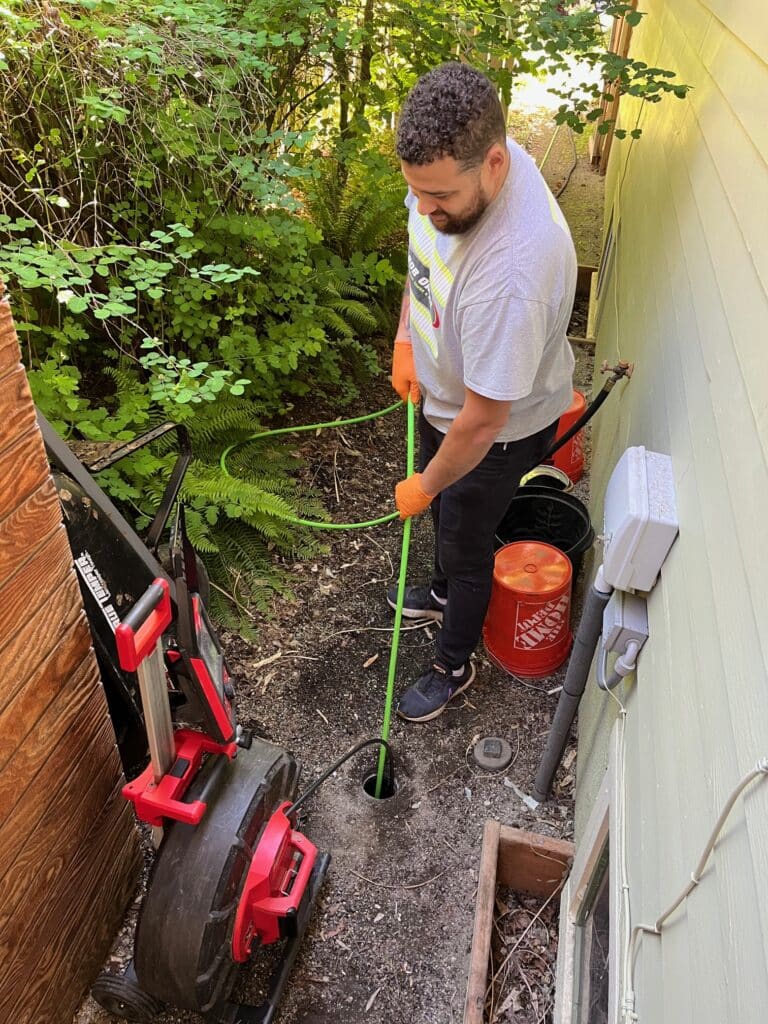
A Bob Oates technician performs hydro jetting on a sewer line using an outside cleanout to remove roots, grease, and buildup.
Can Recurring Drain Clogs Be Prevented?
Not every plumbing problem is preventable, especially when aging or damaged pipes are involved. But there are some things you should never do to pipes, and good habits can reduce unnecessary buildup and help keep drains flowing properly.
Avoid pouring grease or cooking oil down kitchen drains, use drain screens to catch hair and debris, and only flush toilet paper and human waste.
It’s also worth paying attention to drains that are gradually getting slower. Addressing a developing problem is often easier than waiting until the line is completely blocked.
When Should You Call a Professional for a Recurring Clog?
Consider professional drain service when:
- The same drain keeps clogging
- A clog returns soon after being cleared
- Multiple drains are slow at the same time
- Water or sewage backs up into another fixture
- You hear persistent gurgling from drains or toilets
- You suspect tree-root intrusion
- DIY methods aren’t solving the problem
- You’re unsure whether the problem is in a drain or the main sewer line
Recurring clogs are often a symptom. Finding the underlying cause is the key to determining what should be done next.
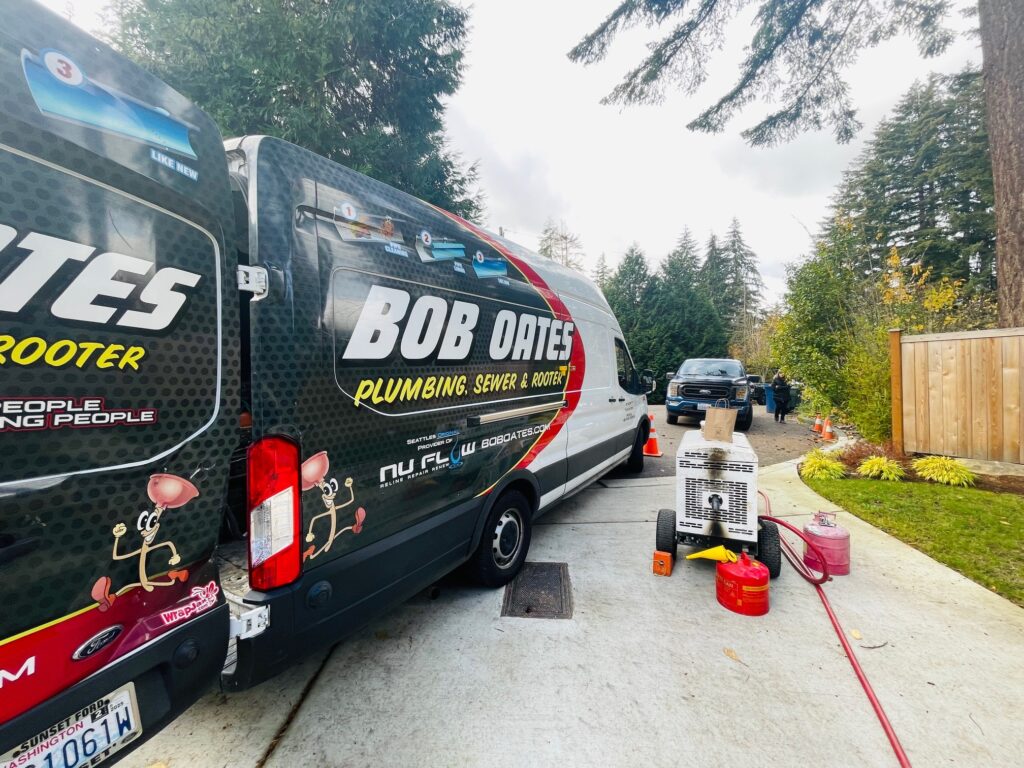
The Bob Oates Plumbing, Sewer & Rooter team performing a residential sewer repair service in the Greater Seattle Area.
Get to the Bottom of Recurring Drain Clogs
If you’re tired of dealing with the same clogged drain over and over, Bob Oates Plumbing, Sewer & Rooter can help.
Our experienced team serves homeowners throughout Greater Seattle with drain inspections, drain cleaning, drain snaking, hydro jetting, and sewer services. We’ll evaluate the problem, explain what we find, and recommend an appropriate solution based on the condition of your plumbing system.
Whether the answer is straightforward drain cleaning or further investigation of the sewer line, the goal is the same: solve the cause of the recurring problem — not just temporarily clear the symptom.
Call or contact Bob Oates today to schedule drain service or request a free estimate.
We’re available 24/7 for emergency plumbing service, and our locally dispatched crews serve homes and businesses across the Greater Seattle Area, including:
- Ballard
- Bellevue
- Federal Way
- Fremont
- Greenwood
- Kent
- Lynnwood
- Magnolia
- Maple Leaf
- Phinney Ridge / Green Lake
- Queen Anne
- Renton
- Seattle
- Shoreline
- Tacoma
- Wallingford
- West Seattle
Further Reading
Top 5 Ways to Ruin Your Garbage Disposal (and What to Do Instead)


Rated 5 Stars by Johanna G.
via Yelp.com
"Nothing but great experiences with Bob Oates! Would highly recommend for all your sewer and plumbing needs! Honest, hard working company!"

Proud Member of BOMA
CALL (206) 789-4944
Serving the Greater Seattle Area