
When Is Sewer Line Replacement Necessary?
CALL (206) 789-4944
Serving the Greater Seattle Area
Your sewer line isn’t something you think about every day — until something goes wrong. And when it does, the question becomes clear:
Can this be repaired… or does it need to be replaced?
While many sewer issues can be fixed with targeted repairs, there are situations where a full sewer line replacement is the smarter, more cost-effective long-term solution. Understanding the difference can help you avoid ongoing problems, property damage, and unnecessary expenses.
Common Signs Your Sewer Line May Need Replacement
Not every sewer issue means starting from scratch. But when problems become persistent or severe, replacement is often the better path forward.
1. Frequent Repairs and Recurring Problems
If you’re dealing with repeated clogs, backups, or slow drains — even after professional service — it may point to a larger underlying issue.
-
Recurring sewer backups
-
Multiple drain slowdowns throughout the home
-
Temporary fixes that don’t last
What it means:
If repairs keep adding up, replacing the line can eliminate the root cause instead of treating symptoms over and over again.
2. Widespread or Structural Pipe Damage
A sewer camera inspection is one of the best ways to understand what’s happening underground. If the inspection reveals significant deterioration, replacement is often recommended.
-
Collapsed or severely cracked pipes
-
Multiple break points along the line
-
Sections that have shifted or separated
What it means:
When damage is extensive, repair methods may not be enough to restore the integrity of the entire system.
3. Aging or Outdated Pipe Materials
Older sewer lines — especially those made from cast iron, clay, or concrete — naturally degrade over time.
-
Corrosion or rust in metal pipes
-
Crumbling or worn-down pipe bottoms
-
Increased vulnerability to root intrusion
What it means:
Even if the line hasn’t fully failed yet, aging materials can lead to repeated issues. Replacement can be a proactive investment in your home’s plumbing system.
4. Tree Root Intrusion
Mentioned just above, tree root invasion one of the most common causes of sewer line damage in the Pacific Northwest.
-
Roots entering through small cracks
-
Pipes becoming blocked or broken as roots expand
-
Recurring clogs despite cleaning
What it means:
If root intrusion is severe or widespread, replacing the pipe may be the only way to fully resolve the issue.
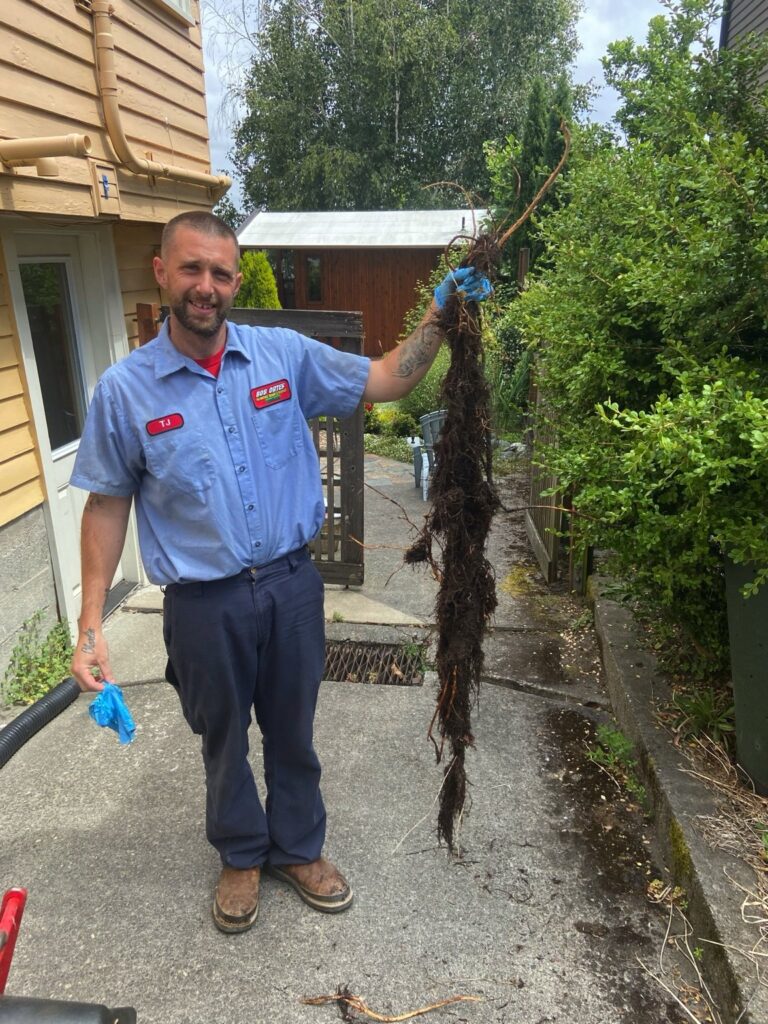
Tree roots extracted from a sewer pipe after clearing a major blockage.
5. Sewer Line Collapse or Major Blockage
In some cases, a sewer line becomes completely unusable.
-
Wastewater backing up into the home
-
Drains that stop working entirely
-
Strong sewer odors with no clear source
What it means:
A collapsed or fully blocked line typically requires replacement, as there’s no clear path for wastewater to flow.

A sewer line failure is often visible as a lush green stripe cutting through an otherwise brown yard.
Repair vs. Replacement: What’s the Right Call?
Not every sewer problem requires digging up your yard. Modern plumbing offers both repair and replacement options depending on the condition of the pipe.
-
Repairs work best for isolated issues like small cracks or minor root intrusion
-
Replacement is recommended for aging systems, widespread damage, or recurring failures
In many cases, a professional inspection will clearly show which option makes the most sense.
Modern Sewer Line Repair and Replacement Options
The good news? Sewer line replacement isn’t what it used to be. Today, many projects can be completed with minimal disruption using advanced trenchless sewer repair methods.
Pipe Lining (CIPP): A “Pipe Within a Pipe” Solution
Pipe lining — also known as cured-in-place pipe (CIPP) — is one of the most efficient and least invasive ways to restore a damaged sewer line.
After a sewer camera inspection confirms the pipe is structurally suitable, a flexible, epoxy-coated liner is inserted into the existing pipe. The liner is then inflated and cured in place, creating a durable new pipe inside the old one.
Why homeowners choose pipe lining:
-
Minimal digging required
-
Faster completion (often in a single day)
-
Preserves landscaping, driveways, and structures
-
Creates a seamless, joint-free interior that resists future leaks and root intrusion
The result is a long-lasting solution that restores full function with little to no downtime. Trenchless pipe lining works across a wide range of pipe sizes and is one of the most cost-effective options when the original pipe hasn’t completely collapsed.

On this trenchless sewer repair job, Bob Oates techs installed 70 feet of 4-inch liner using blue light curing — restoring service in hours with no digging required. Traditional methods can take up to 48 hours and involve major excavation.
Pipe Bursting: Replacement Without Full Excavation
When a sewer line is too damaged for lining — such as when it has collapsed or lost its shape — pipe bursting offers a powerful trenchless replacement option.
This method involves pulling a new high-density polyethylene (HDPE) pipe through the existing line while simultaneously breaking apart the old pipe underground. A specialized bursting head fractures the old pipe outward as the new pipe is installed in its place.
Key advantages of pipe bursting:
-
Replaces the entire pipe, not just reinforces it
-
Requires only small access points at each end
-
Ideal for severely damaged or collapsed lines
-
Minimizes disruption compared to traditional excavation
Once the new pipe is installed, the system is tested and inspected to ensure everything is functioning properly. The old pipe fragments remain in the surrounding soil but do not affect the performance of the new line.

Bob Oates technician using professional pipe bursting technology — a TRIC pulling unit — for replacing an underground sewer line.
When Trenchless Isn’t an Option
In cases of severe collapse or complex layouts, excavation may still be necessary.
While more involved, this method allows full access to replace the entire line when needed.
Don’t Wait for a Small Problem to Become a Major Repair
Sewer repair issues rarely fix themselves. What starts as a slow drain or occasional backup can quickly turn into property damage, health risks, and costly repairs.
If you’re noticing signs of sewer trouble, a professional inspection is the best first step. It provides clarity on the condition of your line and helps determine whether repair or replacement is the right solution.
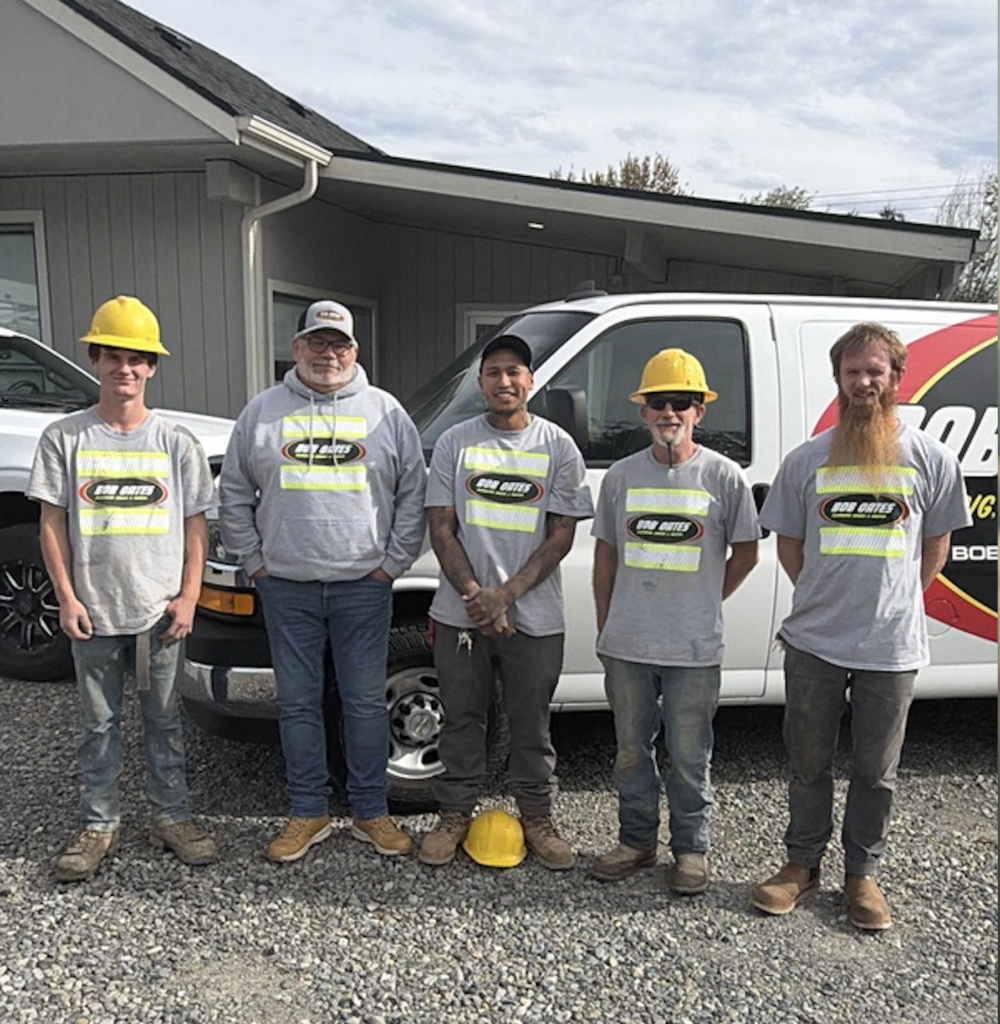
The Bob Oates underground team with GM John Peterson after another successful sewer repair job.
Bob Oates Sewer Rooter: Trusted Sewer Line Solutions in the Greater Seattle Area
At Bob Oates Plumbing, Sewer & Rooter, we help homeowners make informed decisions about their sewer systems — without pressure or guesswork. And we pride ourselves on being the Home of the Second Opinion!
Whether it’s a targeted repair or a full sewer line replacement, our team uses advanced technology and decades of experience to recommend the most effective solution for your home.
Fill out our contact form or call the office anytime — we’re here for you 24/7/365!
Our locally dispatched crews serve homes and businesses across King, Snohomish, and Pierce Counties, including:
- Ballard
- Bellevue
- Federal Way
- Fremont
- Greenwood
- Kent
- Lynnwood
- Magnolia
- Maple Leaf
- Phinney Ridge / Green Lake
- Queen Anne
- Renton
- Seattle
- Shoreline
- Tacoma
- Wallingford
- West Seattle
Frequently Asked Questions
How do I know if my sewer line needs to be replaced instead of repaired?
If you are dealing with recurring backups, multiple slow drains, widespread pipe damage, or an aging sewer line that keeps causing problems, replacement may be the better long-term solution. A sewer camera inspection is usually the best way to determine whether a repair will hold or whether the line should be replaced.
Can a sewer line be replaced without digging up the whole yard?
In many cases, yes. Trenchless methods like pipe lining and pipe bursting can often replace or restore a sewer line with far less digging than traditional excavation. The right method depends on the condition, shape, and accessibility of the existing pipe.
What is the difference between pipe lining and pipe bursting?
Pipe lining creates a new interior liner inside the existing pipe, making it a good option when the original pipe is still structurally suitable. Pipe bursting is used when the line is too damaged for lining and involves pulling a new pipe through the old one while breaking the old pipe apart underground.
Do tree roots mean I need a full sewer line replacement?
Not always. Minor root intrusion can sometimes be cleared and repaired. But if roots have caused major cracking, repeated blockages, or widespread pipe failure, replacement may be the more reliable fix.
Is sewer line replacement always done with excavation?
No. Some sewer lines can be replaced with trenchless methods, while others require excavation because of severe collapse, complex layouts, or access limitations. A professional inspection will show which approach makes the most sense for the property.


Rated 5 Stars by Johanna G.
via Yelp.com
"Nothing but great experiences with Bob Oates! Would highly recommend for all your sewer and plumbing needs! Honest, hard working company!"

Proud Member of BOMA
CALL (206) 789-4944
Serving the Greater Seattle Area