
Risks of Delaying Sewer Repairs

CALL (206) 789-4944
Serving the Greater Seattle Area

Your sewer line is largely out of sight, which can make it easy to put off dealing with a problem — especially when the symptoms seem minor.
A slow drain clears up. An occasional sewer odor disappears. A backup happens once and doesn’t immediately return. It can be tempting to assume the problem has resolved itself.
Unfortunately, sewer line problems don’t always stay small.
Tree roots can continue growing inside a pipe. Cracks and separated joints can deteriorate further. Buildup can gradually restrict wastewater flow. And a damaged section of pipe that is still functioning today may eventually fail.
That doesn’t mean every slow drain or clog requires sewer repair. But recurring symptoms are worth investigating. A professional sewer camera inspection can help determine what is actually happening inside the line — and whether cleaning, maintenance, monitoring, or repair is the appropriate next step.
Here are some of the problems that can develop when a damaged sewer line goes unaddressed.
A Small Sewer Problem Can Become a Bigger Repair
Sewer lines are designed to operate for many years, but they aren’t immune to age, shifting soil, corrosion, tree root intrusion, cracks, offset joints, and other forms of deterioration.
Some problems develop gradually.
A small opening in a pipe, for example, may allow tree roots to enter in search of moisture. Once inside, those roots can continue growing and collect grease, debris, and other material flowing through the line. What began as a relatively small point of intrusion can eventually become a substantial obstruction.
Cracks and damaged joints can also worsen over time. Depending on the condition of the pipe and surrounding soil, deterioration may eventually leave a section of the sewer line vulnerable to significant failure or collapse.
Finding these problems earlier generally gives a homeowner more time to understand the situation and consider the available options.
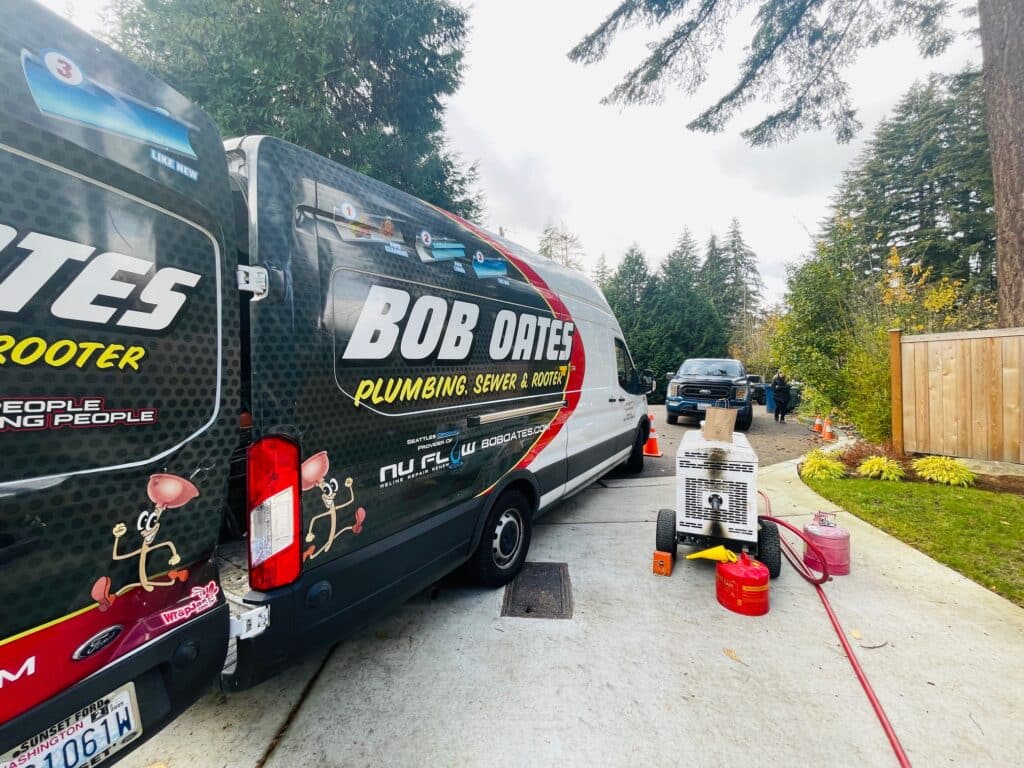
Bob Oates van and equipment at residential sewer job, Bellevue, WA
Recurring Clogs and Slow Drains May Get Worse
One clogged drain doesn’t necessarily indicate a damaged sewer line. Many ordinary drain clogs occur close to the fixture and can be resolved with proper drain cleaning.
A pattern is more concerning.
If multiple drains are slow, toilets repeatedly back up, or the same drainage problem keeps returning after cleaning, the underlying issue may be farther down the plumbing system or inside the main sewer line.
Possible causes include:
- Tree root intrusion
- Heavy buildup or obstructions
- Cracked or deteriorating pipe
- Separated or offset joints
- Low or sagging sections of pipe
- A partially collapsed sewer line
Repeatedly clearing a blockage without identifying why it keeps returning can leave the underlying problem unresolved.
A sewer camera inspection allows a technician to see inside the line and determine whether you’re dealing with a routine obstruction or a problem with the pipe itself.

Metal sewer pipe 50 mm dia clogged with fats, oils, and grease.
Delaying Repairs Can Increase the Risk of a Sewer Backup
One of the most unpleasant consequences of a severely restricted or damaged sewer line is a sewage backup.
Wastewater needs a clear path from your home into the municipal sewer system. If roots, debris, damaged pipe, or another obstruction significantly restricts that path, wastewater may begin backing up through lower-level drains, tubs, showers, or toilets.
At that point, what began as a drainage problem can become an urgent cleanup and sanitation issue inside the home.
Warning signs shouldn’t automatically be interpreted as an impending sewer backup, but recurring backups, multiple slow drains, gurgling fixtures, and persistent sewer odors are good reasons to investigate the system rather than wait for the symptoms to become more severe.
Leaking Sewer Pipes Can Affect the Surrounding Property
Not every sewer line failure occurs inside the home.
A cracked or leaking underground sewer pipe can release wastewater into the surrounding soil. Depending on where the damaged line is located and how severe the problem becomes, homeowners may notice unusually wet areas, unpleasant odors, soil changes, or unusually lush patches of grass above the sewer line.
Long-term leakage can also contribute to soil erosion or instability around the damaged pipe.
The exact consequences depend heavily on the location and severity of the leak, which is another reason diagnosing the problem is preferable to guessing from symptoms above ground.

A sewer line failure is often visible as a lush green stripe cutting through an otherwise brown yard.
Waiting Can Limit Your Sewer Repair Options
Catching sewer damage earlier isn’t only about preventing a backup. It may also preserve more repair options.
Not every damaged sewer line needs to be completely excavated and replaced.
Depending on the condition and configuration of the existing pipe, trenchless sewer repair methods may allow technicians to rehabilitate the line with substantially less excavation.
One option is cured-in-place pipe lining, or CIPP. Pipe lining creates a new, seamless pipe within the existing sewer line and can be an effective solution for certain cracks, root-entry points, leaks, and deteriorated sections.
However, trenchless repair isn’t appropriate for every sewer line. A severely collapsed or structurally compromised pipe may require excavation or conventional replacement.
The condition of the existing line determines the options available — which makes an accurate diagnosis especially important.
Start With a Sewer Camera Inspection
Seeing symptoms of a sewer problem doesn’t mean you should immediately assume the worst.
The first question should be much simpler:
What is actually happening inside the pipe?
A professional sewer camera inspection can identify tree roots, obstructions, cracks, separated joints, deterioration, previous repairs, low sections, and severely damaged or collapsed pipe.
That information helps determine the appropriate response.
If the pipe is structurally sound and simply needs cleaning, professional drain or sewer cleaning may be enough. If roots have entered the line, they can be removed and the entry point evaluated. If damage is present, a technician can determine whether conventional sewer repair, trenchless repair, pipe lining, or another approach makes sense.
And sometimes an inspection confirms that a sewer line is still in good condition.
The goal is to make the decision based on what is actually happening underground rather than assumptions.
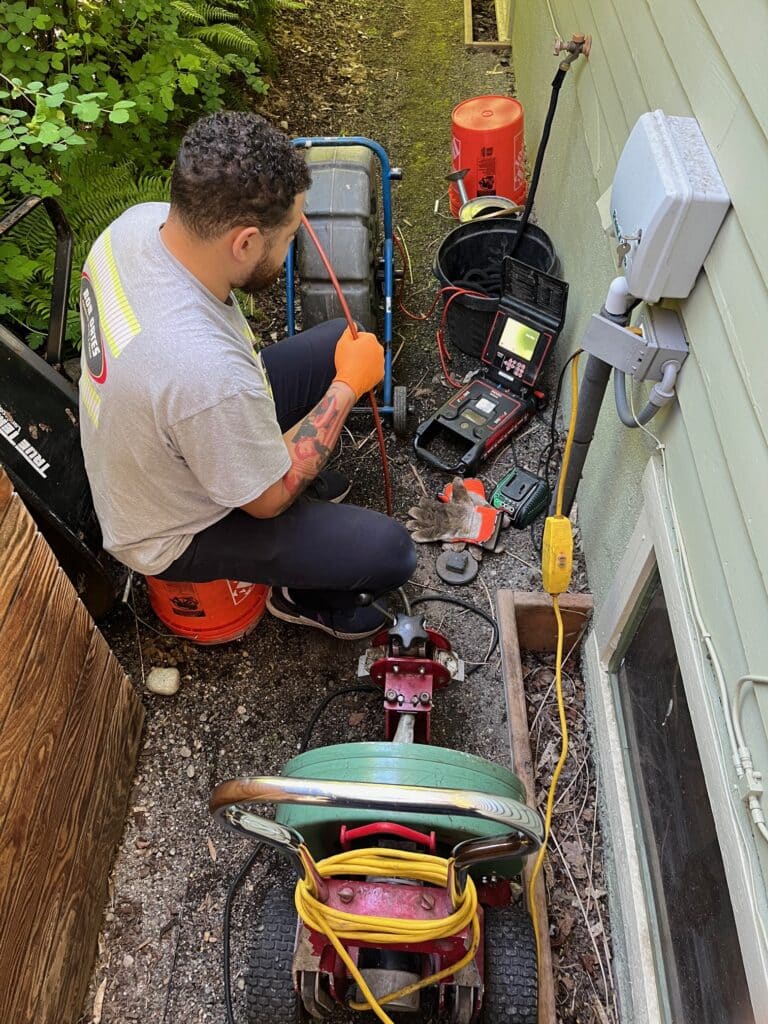
A Bob Oates technician monitors a live sewer camera feed while inspecting underground drain lines.
When Should You Have a Sewer Problem Checked?
Consider having your sewer or drain system evaluated if you notice:
- Recurring drain or sewer clogs
- Multiple slow drains at the same time
- Sewage backing up through drains or fixtures
- Persistent or unexplained sewer odors
- Gurgling toilets or drains
- Previous problems with tree root intrusion
- Unexplained wet or unusually green areas in the yard
- Drainage problems that repeatedly return after cleaning
Older Seattle-area homes and properties surrounded by mature trees can also benefit from knowing the condition of their sewer lines before obvious problems develop.
The presence of one symptom doesn’t necessarily mean you need sewer repair. It means there may be value in finding out what’s causing it.
Get Clear Answers Before a Sewer Problem Gets Worse
When something doesn’t seem right with your sewer system, waiting for a complete backup or pipe failure usually isn’t the best way to find out what’s happening.
Bob Oates Plumbing, Sewer & Rooter provides sewer camera inspections, sewer cleaning, conventional sewer repair, and trenchless sewer solutions throughout Greater Seattle.
Our experienced sewer technicians can inspect the line, explain what they find, and recommend an appropriate next step based on the actual condition of the pipe.
And if you’ve already received a recommendation for a major sewer repair or replacement, remember that Bob Oates is the Home of the Second Opinion. We’ll evaluate the line and help confirm whether the proposed work — and repair method — makes sense.
Give us a call at (206) 789-4944 or schedule an appointment online to get clear answers about your sewer line.
Frequently Asked Questions
What happens if you wait too long to repair a sewer line?
An existing sewer problem may worsen over time. Tree roots can continue growing inside the pipe, cracks or separated joints may deteriorate further, and restricted flow can increase the risk of recurring clogs or sewage backups. Addressing symptoms earlier can also help preserve more repair options.
Does a slow drain mean I need sewer repair?
Not necessarily. A single slow drain is often caused by a localized clog that can be resolved with professional drain cleaning. However, recurring clogs, multiple slow drains, gurgling fixtures, or repeated backups may point to a deeper issue in the sewer line and are worth investigating.
How do I know if my sewer line is damaged?
Common warning signs include recurring clogs, multiple slow drains, sewer odors, gurgling fixtures, sewage backups, previous tree root problems, and unexplained wet or unusually green areas in the yard. A sewer camera inspection is the best way to see what is actually happening inside the pipe.
Can a damaged sewer line be repaired without digging?
In some cases, yes. Trenchless methods such as cured-in-place pipe lining may repair cracks, leaks, root-entry points, and other types of deterioration with minimal excavation. However, severely collapsed or structurally compromised pipes may still require conventional excavation and replacement.


Rated 5 Stars by Johanna G.
via Yelp.com
"Nothing but great experiences with Bob Oates! Would highly recommend for all your sewer and plumbing needs! Honest, hard working company!"

Proud Member of BOMA
CALL (206) 789-4944
Serving the Greater Seattle Area